2026 Best Aluminum Foil Box Options for Global Buyers?
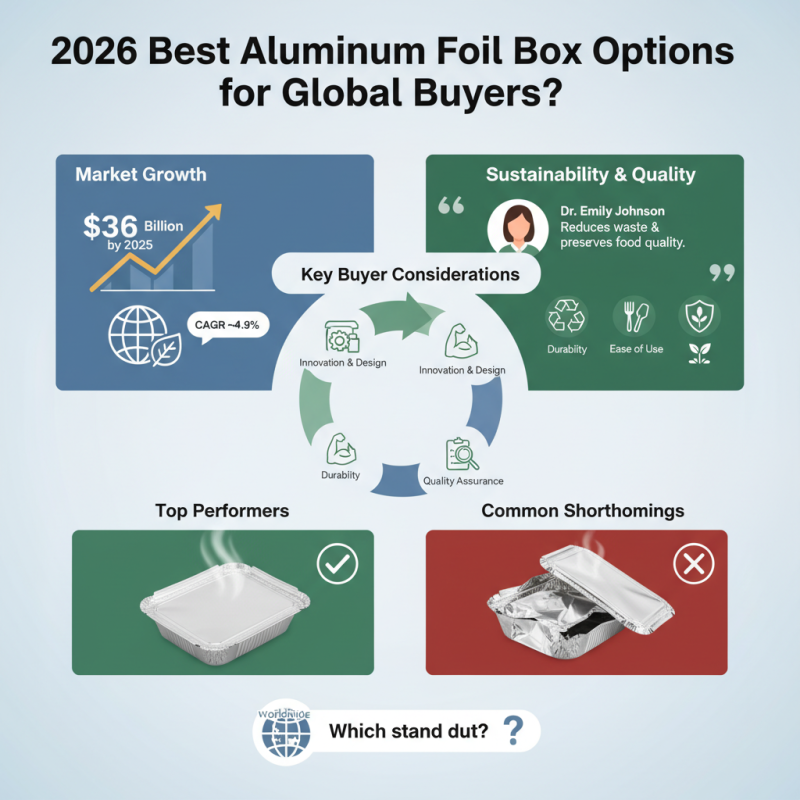
As global demand for sustainable packaging solutions rises, the Aluminum Foil Box market experiences notable growth. According to a recent market analysis by Grand View Research, the aluminum foil packaging market is expected to reach $36 billion by 2025, reflecting a compound annual growth rate (CAGR) of approximately 4.9%. This momentum makes the Aluminum Foil Box a focal point for manufacturers and consumers alike.
Industry expert Dr. Emily Johnson emphasizes, “The transition to aluminum foil for packaging not only reduces waste but also preserves food quality.” With this shift in consumer preferences, it is imperative for buyers to consider key features when selecting the best Aluminum Foil Box. Innovation in design and functionality can influence user experience, but it’s crucial to also address quality concerns.
While many products promise efficiency, not all deliver on their promises. Some Aluminum Foil Boxes fall short in durability or ease of use, necessitating careful evaluation. As the market expands, it’s vital to discern which options truly stand out. This article will explore the best Aluminum Foil Box choices for buyers worldwide, highlighting both strengths and areas for improvement.
Top Features to Consider When Choosing Aluminum Foil Boxes
When selecting an aluminum foil box, consider several key features to ensure practicality and efficiency. A sturdy construction is essential. Look for boxes that can withstand the rigors of the kitchen. Thin, flimsy boxes may tear easily, causing frustration during use. A well-designed, robust box is worth the investment.
Another important feature is the cutter design. Efficient cutting mechanisms make a big difference. Some boxes come with serrated edges, while others might need scissors. A convenient cutter can save time while preparing meals. Ensure the cutter works smoothly without jamming or dulling quickly.
Remember to consider the size of the foil. Different cooking tasks require different lengths. A box that holds a substantial roll allows for larger sheets, suitable for recipes needing extra coverage. However, overly large boxes can be cumbersome. Balance is key.
Tips:
- Opt for boxes with easy-to-follow instructions.
- Test the cutter before full use.
- Reflect on usage. If you find the box too large or small, reassess your needs.
2026 Best Aluminum Foil Box Options for Global Buyers
| Option | Size (ft) | Thickness (microns) | Sheets per Box | Recyclable | Special Features |
| Standard Roll | 12 | 16 | 75 | Yes | Tear-resistant |
| Heavy-Duty Roll | 12 | 30 | 50 | Yes | Extra strong |
| Non-Stick Foil | 12 | 20 | 60 | Yes | Non-stick surface |
| Eco-Friendly Roll | 12 | 18 | 70 | Yes | Made from recycled materials |
| Baking Foil | 12 | 24 | 40 | Yes | Ideal for baking |
Popular Aluminum Foil Box Brands in the Global Market
When it comes to the aluminum foil box market, several brands have made significant strides globally. Their focus on quality and functionality sets them apart. These boxes are not just about storage; they also serve multiple purposes in the kitchen. Many users appreciate their versatility, whether for wrapping food or lining pans.
Some of the popular brands emphasize sustainability. They prioritize recyclable materials, which resonates well with environmentally conscious consumers. However, it can be difficult to gauge the authenticity of such claims. Transparency in sourcing and production methods is vital but often lacking.
Another aspect worth considering is the design. A user-friendly box can make a significant difference. Some brands invest in easy-cut technology or intuitive dispensing mechanisms. Yet, not all options live up to the marketing hype. Consumers have reported issues with box durability and foil quality, highlighting a need for careful consideration when selecting products. The journey to find the perfect aluminum foil box involves both exploration and scrutiny.
Sustainability and Environmental Impact of Aluminum Foil Packaging
Aluminum foil packaging is a popular choice worldwide. However, its environmental impact raises concerns. Aluminum production is an energy-intensive process. Extracting bauxite, the primary ore, causes habitat destruction and pollution. Each step of production has a significant carbon footprint. This makes sustainability a pressing issue in the industry.
Tips: Consider using aluminum foil made from recycled materials. This can reduce the need for new aluminum production. Proper recycling of used foil can also lessen waste in landfills.
While aluminum foil is recyclable, many consumers still discard it improperly. Awareness is crucial. Not all regions have efficient recycling systems for aluminum. Improper disposal can lead to environmental harm.
Understanding these factors can help buyers make informed choices. Sustainable alternatives are emerging, but change is gradual. Consumers must stay proactive in seeking eco-friendly options. Making small adjustments can significantly impact the environment over time.
Comparative Analysis of Different Aluminum Foil Thicknesses
When it comes to aluminum foil, thickness matters significantly. Different thicknesses provide various benefits and drawbacks. Standard household aluminum foil usually has a thickness of about 0.016 mm. This type is versatile and ideal for everyday cooking tasks, like lining baking sheets or wrapping food. It can, however, tear easily if not handled carefully.
Heavy-duty aluminum foil, often around 0.024 mm thick, offers greater durability. It's perfect for grilling and tasks requiring higher heat. Users often find it holds up better against sharp objects and extreme temperatures. However, it may be overkill for simple uses. Individuals need to evaluate their cooking style. For instance, some might find the extra cost unjustifiable for everyday use.
There’s also the matter of sustainability. Thinner foils may reduce waste but can lead to cooking mishaps. It’s worth reflecting whether that extra strength is necessary for your needs. Selecting the right aluminum foil involves understanding these nuances. Balancing use case, cost, and environmental impact can lead to better choices.
Tips for Proper Storage and Usage of Aluminum Foil Boxes
Proper storage and usage of aluminum foil boxes are crucial for maximizing their efficiency. Research indicates that aluminum foil can lose its protective qualities if not stored correctly. Ideally, keep the foil in a cool, dry place away from direct sunlight. This will help maintain its durability. Avoid exposing the foil to moisture, as it can lead to corrosion and spoilage.
When using aluminum foil, be mindful of the side you use. Studies reveal that aluminum foil has two sides: shiny and dull. The dull side is ideal for cooking purposes, as it conducts heat better. For storage, either side works fine. Make sure to seal the foil tightly around food items. A loose wrap can lead to oxidation, compromising freshness.
Using the right thickness of aluminum foil is also essential. Reports suggest that heavier gauge foil can withstand higher temperatures and is better for grilling. However, overusing heavy-duty foil may not be environmentally friendly. Striking a balance between efficiency and sustainability remains a key consideration. Reflecting on these aspects can elevate your experience with aluminum foil.
