10 Tips for Choosing a Customs Broker for Global Trade

A customs broker can be the difference between a shipment that moves smoothly and one delayed by missing documents, unclear fees, or poor communication. The stakes are growing: the World Bank’s 2023 Logistics Performance Index reports an average of 44 days for goods to travel from the exporting country’s entry point to their destination. The WTO’s 2024 outlook forecast global merchandise trade volume growth of 2.6% that year. More trade means more details to manage.

WTO Director-General Ngozi Okonjo-Iweala has summarized the wider value of commerce: “Trade is a force for good.” But that value depends partly on capable people handling the practical work. A broker should understand your products, routes, filing needs, and timelines—not just offer a low quote. Ask how the team handles document checks, shipment updates, unexpected charges, and questions outside business hours. Request clear examples, not broad promises.

Small details matter. A precise answer about who reviews an invoice can reveal more than a glossy brochure. So can a transparent fee schedule. No broker can prevent every delay, and no checklist guarantees a perfect fit. That is worth remembering.

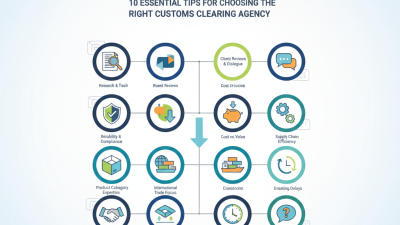
The ten tips below offer a practical way to compare experience, credentials, technology, communication, and service scope. Use them to shape better questions and verify claims before choosing a partner. The right customs broker will not remove every trade complication; the right one should help you see them sooner and respond with confidence.

10 Tips for Choosing a Customs Broker for Global Trade

Understanding the Role of a Customs Broker in Global Trade

A customs broker helps goods cross borders by preparing and submitting shipment information, coordinating with customs authorities, and flagging missing documents. The work often starts before a truck reaches the port. A broker may review product descriptions, declared values, origin details, and supporting records to help ensure a declaration is complete. Small errors matter. A vague description can prompt questions and delay release.

Brokers also explain likely duties, taxes, and clearance steps, but their advice depends on accurate information from the importer. They do not replace a company’s responsibility to provide truthful records or check requirements for its shipment. Procedures can change, and a broker’s experience in one route may not cover every destination. Confirm important details with the broker and relevant official sources. I have seen teams assume a familiar process will repeat; sometimes it does not.

Practical tip

Ask who will handle your entries, how exceptions are reported, and what documents are needed before pickup. Check experience with your product type and trade lanes. Request a sample status update. Clear communication counts. Compare service scope, not just fees, and agree on response times in writing.

Assessing Your Company’s Import and Export Requirements

Before comparing customs brokers, map what your company actually ships, where it ships from, and where it delivers. List product categories, shipping frequency, typical shipment value, transport modes, and the countries involved. Include seasonal surges and unusual cargo dimensions; a quiet month may hide a difficult peak. Details matter. Also note who prepares product descriptions, assigns tariff classifications, and maintains origin and valuation records. Those tasks often sit across sales, purchasing, and finance, not in one tidy file. Easy to miss.

Ask a broker how its operating model fits these realities. Does it support your shipping routes, shipment volume, and preferred customs-entry workflow? Can it handle routine declarations and exceptions, such as an invoice mismatch or missing transport document? Request clear responsibilities, response times, escalation contacts, and a list of data needed before dispatch. Gaps cause delays. A broad network does not guarantee local knowledge; ask who manages your account and how updates reach your team.

Share a sample shipment file with sensitive details removed, then ask the broker to identify missing fields and likely handoffs. Compare answers, not just fees. Low rates can exclude filing support, after-hours help, or corrective work. Keep your own records and verify how the broker reports status, document changes, and unresolved questions. You may discover gaps only after the first busy season.

10 Tips for Choosing a Customs Broker for Global Trade — Assessing Your Company’s Import and Export Requirements

# What to Assess Questions to Ask Evidence of a Good Fit
1 Countries and lanes
List the countries where your company imports, exports, or transits goods, including expected growth markets.
Can the broker support customs procedures in each relevant jurisdiction? Which services are handled directly, and which rely on local partners? A clear country-by-country scope that distinguishes the broker’s own coverage from partner-supported services.
2 Product types and classification
Identify product categories, materials, technical specifications, and any goods that may be subject to special controls.
How are tariff classifications reviewed and documented? Can the broker flag when a classification needs confirmation from the relevant customs authority? A documented classification process that uses product information and keeps supporting records for review.
3 Import and export scope
Clarify whether you need import declarations, export declarations, transit support, or help coordinating other trade formalities.
Which filings and related services are included in the proposal? Are any filings or responsibilities retained by your company or another provider? A written service map that identifies responsibilities, handoffs, and the jurisdictions in which each service is available.
4 Origin and trade programs
Review where goods are made or substantially transformed and whether preferential tariff treatment may be relevant.
Can the broker help organize origin data and supporting documents? What information must your company provide to substantiate an origin claim? Clear guidance on documentation and eligibility checks, without assuming that a trade agreement automatically qualifies every shipment.
5 Customs value and transaction details
Consider invoice values, currency, freight, insurance, assists, royalties, related-party transactions, and other potentially relevant valuation details.
How does the broker collect and review data needed for customs valuation? How are discrepancies or missing details escalated? A consistent data checklist and a defined process for documenting questions and corrections before filing.
6 Permits, product rules, and controls
Check whether products may require licenses, certificates, permits, or other agency documentation in the destination or origin country.
Can the broker identify potential document requirements for the products and routes involved? Who is responsible for obtaining each permit or certificate? A clear division of responsibilities and a process for checking current requirements with the appropriate authorities.
7 Shipment volume and service levels
Estimate shipment frequency, seasonal peaks, modes of transport, shipment sizes, and urgent or time-sensitive movements.
What are the normal operating hours, escalation contacts, and target response times? How are peak periods and urgent corrections handled? Service expectations that match your shipment profile, with named escalation routes and measurable reporting where available.
8 Systems and data exchange
Assess how shipment, invoice, packing-list, and product data will move between your systems and the broker’s workflow.
Which data-transfer options are supported? How are access, confidentiality, error correction, and record retention managed? A practical onboarding plan, agreed data fields, validation steps, and appropriate controls for sensitive business information.
9 Fees and additional charges
Compare service fees, filing charges, disbursement arrangements, amendment costs, storage-related coordination, and other possible charges.
Which charges are included, variable, or billed by third parties? How are out-of-scope work and fee changes approved? A transparent fee schedule with clear assumptions, billing terms, and a process for approving additional work.
10 Compliance, records, and continuity
Determine how your company will oversee filings, retain supporting documents, resolve errors, and maintain operations during disruptions.
What records and filing confirmations are provided? How are corrections, audits, staff coverage, and service interruptions managed? Defined record-access and issue-resolution procedures, plus a continuity plan appropriate to your trade operations.

Verifying a Broker’s Credentials and International Expertise

A customs broker’s credentials should be checked, not assumed from a polished website. Ask which government authority issued the relevant license or registration, then confirm its status through that authority’s official records. Requirements differ by country, so a document valid in one market may not qualify someone to handle entries elsewhere. Paperwork matters. So does judgment. It is easy to rush this check when a shipment is waiting.

Ask how long the broker has handled your specific routes, product categories, and shipping methods. Request a recent, anonymized example of a difficult clearance and how the team resolved it. Their answer should explain practical steps, such as checking invoice details, confirming tariff classifications, and flagging missing documents before cargo arrives. Vague claims of “global coverage” are not enough. Speak with current clients, too, and ask about response times and error handling. No reference can guarantee future performance, but patterns are useful.

International expertise also means knowing when local advice is needed. Ask who handles each destination, what languages the team supports, and how regulatory updates reach staff. Find out who contacts you when information is unclear, and how urgent issues are escalated across time zones. A broker may have strong credentials yet limited experience on your route. That distinction can be missed, especially during a busy season. Request clear service terms and a named point of contact before choosing.

Evaluating Service Capabilities, Technology, and Communication

Tip 1: Match the broker’s service capabilities to your actual shipment pattern. Share a sample week of destinations, shipment sizes, and seasonal peaks. Ask who handles routine entries, urgent questions, and document corrections. Request a sample status update, with sensitive details removed. Specific examples reveal more than a polished sales presentation.

Tip 2: Check how the broker’s technology fits your workflow. Can it receive shipment data from your systems, flag missing fields, and show clearance milestones? Ask to see a realistic screen, not just slides. A useful dashboard should make delays and next steps easy to spot. Still, technology is not a substitute for careful review.

Tip 3: Test communication before committing. Agree on a main contact, backup contact, response window, and escalation path. Send a few practical questions and note whether the answers are clear and consistent. No broker communicates perfectly every time. That matters. I would also ask how the team shares updates when information is incomplete; a candid “we’re checking” is better than false certainty.

Comparing Fees and Selecting a Broker for Long-Term Needs

A customs broker’s headline fee rarely shows the full cost of service. Compare what each quote includes: entry preparation, document review, shipment amendments, after-hours support, and any minimum monthly charge. Ask whether duties and taxes are paid on your behalf and whether that creates separate processing fees. Request a sample invoice with sensitive details removed. It can reveal small charges that a rate sheet hides.

Look beyond the first shipment. A broker who handles your current volume may struggle when orders double or seasonal arrivals bunch up at the port. Ask how the team manages peak periods, who covers your account, and how quickly it flags missing paperwork. Check whether its experience matches your goods, shipping lanes, and software needs. A polished sales call is useful, but a clear escalation path matters more when a shipment is delayed.

Compare fees against the work you actually need, not just the lowest number. Forecasts are imperfect. Your shipping mix may change, and some fees depend on shipment details. Ask for written examples of charges under different scenarios, plus notice before rates change. It is easy to overvalue a cheap quote; I might still miss a fee buried in the fine print. Review the agreement annually, and discuss what service levels can realistically be maintained as your business grows.

Go to Top