How to Choose the Best Freight Shipping Options for Your Business Needs

In the dynamic world of logistics, selecting the most suitable freight shipping options is crucial for the success and efficiency of your business. With numerous carriers, service levels, and pricing structures available, navigating this landscape can be daunting. However, understanding your unique shipping needs and the factors that influence costs can help streamline the process. Freight shipping plays a pivotal role in ensuring your products reach customers in a timely and cost-effective manner, impacting both customer satisfaction and your bottom line.

As businesses grow and evolve, so do their shipping requirements. Factors such as the volume of goods, destination, delivery timelines, and budget constraints significantly influence the choice of freight shipping solutions. By carefully assessing these criteria, organizations can make informed decisions that align with their operational goals. Moreover, evaluating the benefits and drawbacks of different shipping methods—such as air, sea, and ground transport—can further enhance logistical strategies and optimize supply chains. This guide will delve into the essential aspects of choosing the best freight shipping options, empowering businesses to thrive in a competitive market.

How to Choose the Best Freight Shipping Options for Your Business Needs

Understanding Your Business's Freight Shipping Requirements
How to Choose the Best Freight Shipping Options for Your Business Needs

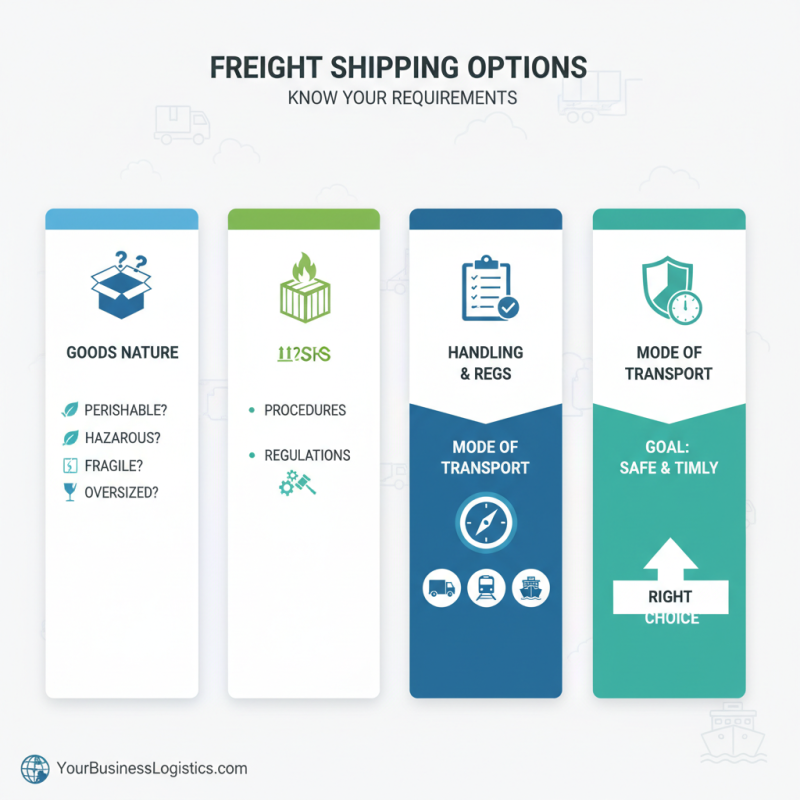
When determining the best freight shipping options for your business, it’s essential first to understand your specific shipping requirements. Start by assessing the nature of the goods you need to transport. Are they perishable, hazardous, fragile, or oversized? Each category has its own set of handling procedures and transportation regulations that must be taken into account. Understanding these characteristics helps in choosing the appropriate mode of transport, whether it be road, rail, air, or sea, to ensure that your products arrive safely and on time.

Additionally, consider the geographic reach of your shipping needs. Are you shipping locally, nationally, or internationally? Each of these destinations can significantly influence freight costs and shipping times. For instance, international shipping may involve customs procedures and longer transit times, while local shipping could allow for more flexible, expedited options. Furthermore, evaluate your budget and service requirements, such as tracking capabilities and delivery speed. By evaluating these factors, you can make informed decisions that align with your business goals and enhance your overall shipping efficiency.
Identifying Different Types of Freight Shipping Options

When selecting the best freight shipping options for your business needs, it's crucial to understand the various types of freight available. The primary categories include full truckload (FTL), less-than-truckload (LTL), rail freight, air freight, and ocean freight. Each type serves different purposes based on shipment size, destination, and urgency.

Full truckload shipping is ideal for large shipments that can fill an entire truck, providing direct transport without the need for transfers. In contrast, less-than-truckload shipping is suitable for smaller shipments, where multiple businesses share a truck, offering a cost-effective solution for those with minimal freight needs.
Rail freight is a reliable option for transporting bulk goods over long distances, particularly for heavy and non-perishable items.
Air freight is the fastest method, but often comes with a higher price, making it best for urgent or high-value shipments.
Lastly, ocean freight is the most economical for large volumes of goods over international routes, although it takes considerably longer.

Understanding these various shipping options allows businesses to make informed decisions based on their logistical requirements, budget constraints, and delivery timeframes. This knowledge not only optimizes shipping costs but also enhances overall supply chain efficiency.

Evaluating Cost vs. Service Quality in Freight Shipping

When evaluating cost versus service quality in freight shipping, businesses must strike a balance that meets their specific logistical needs. According to the Logistics Management 2023 annual report, service quality significantly impacts customer satisfaction, with 56% of shippers stating that timely deliveries are their top priority. Lowering shipping costs may seem beneficial, but a cheaper option can lead to delays and damaged goods, ultimately affecting the bottom line. Thus, understanding the nuances of different freight options and their associated service levels is pivotal.

Tips for evaluating freight options include analyzing carrier reliability based on past performance metrics. Focus on key indicators such as on-time delivery rates and damage claims, as these statistics can illuminate a carrier’s service quality. It's also essential to consider the total landed cost, which encompasses not just transportation, but also handling and logistics fees. This approach helps create a more accurate picture of what each option truly entails, preventing hidden costs from eroding profit margins.

Furthermore, engaging in conversations with logistics providers can yield valuable insights into their shipping methodologies. A collaborative relationship often uncovers potential service improvements that can enhance shipping efficiency. According to FreightWaves, 72% of shippers reported increased value from providers who offered additional services beyond simple transportation. Prioritizing these discussions enables businesses to align their shipping choices with service quality while keeping budget constraints in check.

Freight Shipping Options Comparison

Assessing Transit Times and Reliability of Shipping Providers

How to Choose the Best Freight Shipping Options for Your Business Needs

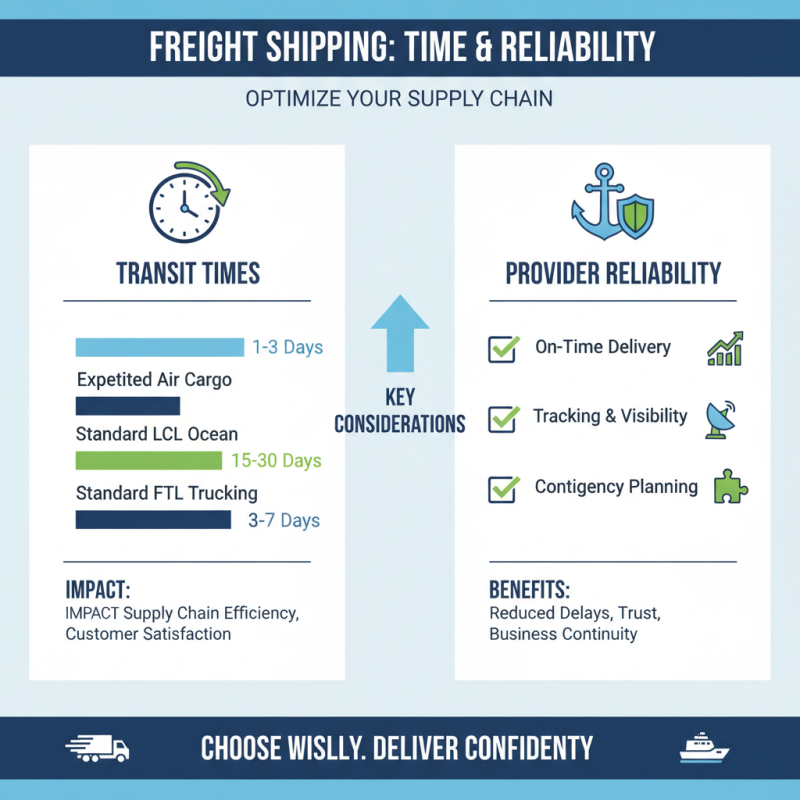
When selecting freight shipping options for your business, assessing transit times and the reliability of shipping providers is essential. Transit times can significantly impact your supply chain efficiency and customer satisfaction. Understanding the typical delivery times for various shipping methods allows you to align your logistics with your business needs. For instance, expedited shipping services might be necessary for perishables or time-sensitive goods, while standard shipping can suffice for less urgent deliveries.

Reliability is another crucial aspect to consider when evaluating shipping providers. A reliable provider not only delivers on time but also maintains consistent communication regarding any potential delays. Checking customer reviews, service metrics, and historical performance can provide insights into a provider's reliability. Additionally, consider their tracking capabilities; real-time tracking can enhance transparency and help manage customer expectations effectively. A combination of dependable transit times and a strong track record of reliability will ensure that your business remains competitive and responsive in a dynamic market.

Choosing the Right Freight Shipping Partner for Your Business

Choosing the right freight shipping partner is pivotal for optimizing your supply chain and enhancing overall business efficiency. According to a report by the Council of Supply Chain Management Professionals, effective logistics management can reduce overall operational costs by as much as 15% while improving customer satisfaction rates. Selecting a freight partner who aligns with your business goals can significantly impact your ability to meet delivery timelines and manage inventory effectively.

When evaluating potential freight shipping partners, consider their service reliability, industry expertise, and technological capabilities. A study from FreightWaves indicated that companies utilizing advanced tracking technology experienced a 25% improvement in on-time delivery performance. This level of visibility allows businesses to manage their freight more proactively, reducing delays and enhancing customer trust. Additionally, partnerships that offer specialized services tailored to your industry can provide a competitive edge, ensuring that your freight is handled with the required level of expertise.

Go to Top