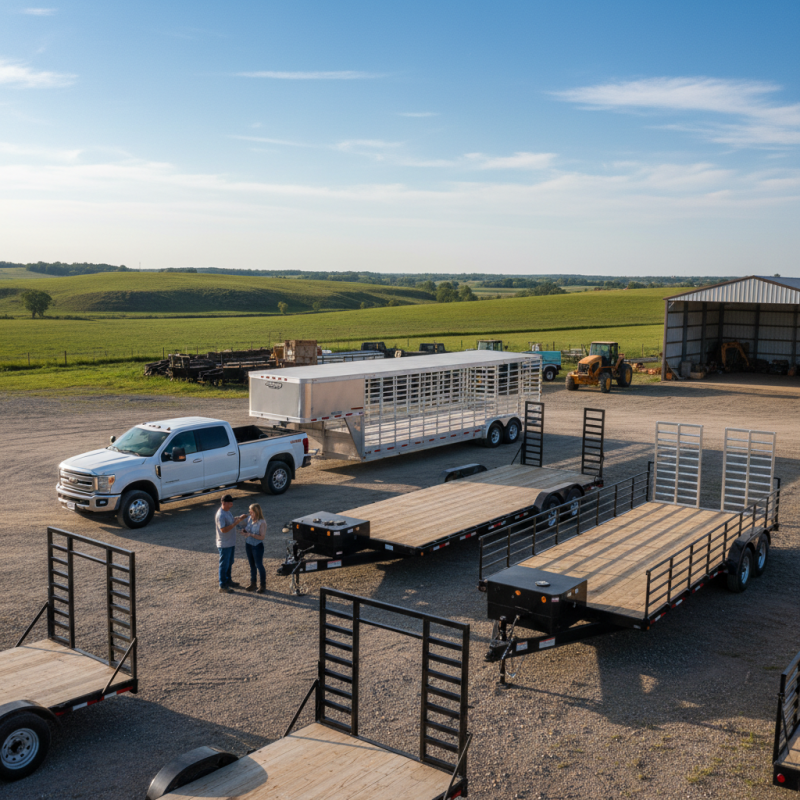
How to Choose the Right Gooseneck Trailer for Your Needs?
Choosing the right Gooseneck Trailer is crucial for various hauling needs. With many options available, making a decision can be overwhelming. A Gooseneck Trailer typically offers better weight distribution and maneuverability than standard trailers.
Consider your specific requirements before making a choice. Evaluate what you plan to transport. Whether it’s livestock, construction equipment, or vehicles, each use case has different demands. Think about the weight capacity, length, and additional features like ramps or side rails.
Mistakes can happen in this process. You might select the wrong size or forget to check compatibility with your truck. Reflecting on these choices can help avoid future headaches. A well-chosen Gooseneck Trailer can enhance your hauling experience significantly.
Understanding Your Towing Requirements for a Gooseneck Trailer
Understanding your towing requirements is crucial when selecting a gooseneck trailer. The primary factor to consider is your vehicle's towing capacity. According to industry data from the National Highway Traffic Safety Administration, most heavy-duty trucks can tow between 10,000 and 30,000 pounds. If you own a standard pickup truck, your limit may be lower.
Consider the trailer weight, load distribution, and type of cargo. A gooseneck trailer’s design allows for better weight distribution, improving stability. The trailer's gross vehicle weight rating (GVWR) should be compatible with your truck. Many users overlook this and face unsafe towing situations.
Think about your specific needs: will you be hauling livestock, equipment, or something else? Define your purpose clearly. The size of the trailer matters too. For instance, a 24-foot trailer is not always suitable for all loads. Ensure you check size limits per state regulations. Making an informed choice involves continuous reflection on your requirements and vehicle capabilities.
Evaluating Different Types and Sizes of Gooseneck Trailers
When selecting a gooseneck trailer, size and type matter greatly. There are various designs, each suited for specific purposes. From flatbeds to enclosed models, understanding your needs is crucial. For instance, a standard flatbed trailer might suffice for hauling equipment, while an enclosed model offers protection from elements.
According to industry reports, the most popular sizes range from 20 to 40 feet. A longer trailer typically provides increased capacity. However, it also requires a more powerful towing vehicle. Be mindful of weight ratings; exceeding these can be dangerous. If you frequently transport livestock, opt for a model with livestock-safe features like ventilated sides.
**Tip:** Always think about the terrain. A heavier trailer can be difficult to navigate in tight spaces.
Ultimately, relate your choice to your specific usage. Reflect on how often you will use the trailer and what you plan to transport. If you need versatility, consider models that offer adjustable features. This could help you adapt to different hauling tasks without needing multiple trailers.
**Tip:** Check the local regulations. Different areas may have size restrictions.
How to Choose the Right Gooseneck Trailer for Your Needs? - Evaluating Different Types and Sizes of Gooseneck Trailers
| Trailer Type | Length (ft) | Weight Capacity (lbs) | Common Uses | Price Range ($) |
| Standard Gooseneck | 20 - 30 | 10,000 - 25,000 | General Cargo, Livestock | 5,000 - 10,000 |
| Flatbed Gooseneck | 25 - 40 | 10,000 - 30,000 | Construction Equipment, Vehicles | 7,000 - 12,000 |
| Enclosed Gooseneck | 20 - 30 | 7,000 - 15,000 | Transporting Goods, Moving | 8,000 - 15,000 |
| Toy Hauler Gooseneck | 30 - 40 | 7,000 - 20,000 | ATVs, Motorcycles, Outdoor Equipment | 10,000 - 20,000 |
| Livestock Gooseneck | 20 - 30 | 8,000 - 16,000 | Transporting Livestock | 6,000 - 12,000 |
Key Features to Consider When Choosing a Gooseneck Trailer
When selecting a gooseneck trailer, several key features are essential to ensure it meets your needs. Payload capacity is one of the most crucial factors. Many gooseneck trailers can handle loads ranging from 10,000 to 30,000 pounds. Understanding your towing vehicle's capacity helps in matching the right trailer. Improper pairing can lead to safety issues and costly mistakes.
The build quality of the trailer materials also matters significantly. Look for steel or aluminum construction. Steel provides strength and durability, while aluminum is lightweight and rust-resistant. According to a recent industry report, trailers made from high-grade materials show a marked increase in lifespan and reduce the likelihood of structural failure.
Another aspect to consider is the trailer's design features. Adjustable hitches allow for better compatibility with various towing vehicles. Some trailers come equipped with storage options for tools and safety equipment. These features enhance usability but may add to the overall trailer weight. Make sure the added weight won’t exceed your vehicle’s towing limitations.
Always reflect on your specific needs. What types of loads will you haul regularly? Will you need additional features like ramps or extra tie-down points? Taking time to evaluate these elements will lead to a more satisfactory purchase.
Key Features to Consider When Choosing a Gooseneck Trailer
Assessing Your Vehicle's Compatibility with Gooseneck Trailers
When selecting a gooseneck trailer, assessing your vehicle's compatibility is crucial. The Gross Vehicle Weight Rating (GVWR) of your truck should align with that of the trailer. According to the North American Trailer Association, many gooseneck trailers range from 7,000 to 30,000 pounds GVWR. Ensure your vehicle can safely handle this weight.
Take a closer look at your truck's hitch rating too. Gooseneck hitches require substantial strength. A standard hitch may not suffice for larger trailers. Research shows that overloading hitches remains a common mistake, leading to potential accidents. Check your truck's specifications in the owner’s manual or through reliable sources.
Another aspect to consider is the truck bed length. A standard bed might not accommodate a longer gooseneck trailer effectively. Experts suggest that 6.5-foot beds work with specific gooseneck models. However, without proper installation, you might face issues like clearance or maneuverability. Conducting thorough research might help avoid costly damages. Don't overlook your towing capacity; it plays a major role in ensuring safety on the road.
Budgeting for Purchase and Maintenance of a Gooseneck Trailer
Budgeting for a gooseneck trailer involves understanding both the purchase price and ongoing maintenance costs. The average price can range from $10,000 to $30,000. This range largely depends on size and features. A study by the National Trailer Dealers Association indicates that about 75% of buyers prioritize durable construction and specific capacities when budgeting.
Maintenance expenses can vary. Regular upkeep usually requires about 5-10% of the trailer’s value annually. This includes checks on tires, brakes, and lights. Neglecting maintenance can lead to costly repairs. For instance, a simple brake issue can escalate into a major expense if not addressed promptly.
Hidden costs must also be considered. Insurance is a significant part of the budget. Rates can differ based on location and usage. Additionally, registration fees and taxes should be factored in. Many overlook these expenses when planning. It's essential to be realistic about the total investment required for a gooseneck trailer. Understanding these aspects will lead to more informed decisions.