Top International Transport Services for Your Global Shipping Needs
The global trade landscape is continually evolving, driven by the demands of globalization and technological advancements. In this context, the importance of efficient and reliable international transport services cannot be overstated. According to a report by the International Federation of Freight Forwarders Associations (FIATA), the international transport industry has experienced a growth rate of 6% annually, underscoring the increasing complexity and volume of global shipping needs. This growth is fueled by the rise in e-commerce and the necessity for businesses to reach customers across borders swiftly and cost-effectively.
Industry expert Dr. Emily McKinney, a renowned logistics strategist, emphasizes the critical role of international transport services in fostering global trade: "Seamless logistics solutions are the backbone of successful international business operations; they can make or break a company's market entry strategy." Her insights highlight the necessity for businesses to partner with competent transport service providers that can navigate the intricate webs of global supply chains.
In this article, we will explore the top international transport services available, focusing on their strengths, offerings, and how they can cater to various shipping needs. As companies expand their reach and aim for new markets, understanding the diverse options within the realm of international transport services becomes essential for achieving operational efficiency and competitive advantage in today’s interconnected world.
Key Factors to Consider When Choosing International Transport Services
When selecting international transport services for your global shipping needs, several key factors should be considered to ensure efficiency and cost-effectiveness. The rapid growth of the global e-commerce logistics market, projected to reach $1.90308 trillion by 2032 from $441.55 billion in 2024, illustrates the increasing demand for robust logistics solutions. Understanding consumer trends, particularly in emerging markets such as the UAE, where e-commerce is booming, can significantly impact your logistics strategy. For example, local insights into consumer behavior and peak shopping seasons can help tailor your shipping operations to maximize sales opportunities.
Additionally, the complexity of maintaining high levels of service in international shipping necessitates a thorough assessment of transport providers. Factors such as customs clearance processes, delivery speed, and tracking capabilities are crucial in choosing a reliable partner. With the rising air passenger volumes in China, which reached a record high of 730 million in 2024, the pressure on the aviation sector also affects freight services. Analyzing the interplay between passenger and cargo transport capacities is essential to ensure that your goods are shipped smoothly and without delays, contributing to overall customer satisfaction in international markets.
Top International Transport Services for Your Global Shipping Needs
| Transport Mode |
Delivery Time |
Cost |
Cargo Capacity |
Tracking Availability |
| Air Freight |
1-3 Days |
High |
Up to 100,000 lbs |
Yes |
| Sea Freight |
10-30 Days |
Low |
Up to 50,000 lbs |
Yes |
| Rail Freight |
5-10 Days |
Medium |
Up to 300,000 lbs |
Yes |
| Road Freight |
3-7 Days |
Medium |
Up to 45,000 lbs |
Yes |
| Courier Services |
1-2 Days |
High |
Up to 150 lbs |
Yes |
Overview of Major Modes of International Transport: Air, Sea, and Land
Global shipping relies heavily on three primary modes of transport:
air, sea, and land,
each offering unique advantages and catering to different logistical needs.
According to the International Air Transport Association, air freight accounts for approximately
35% of global trade by value, despite representing just 1%
by volume. This is primarily due to its speed, which is crucial for high-value goods that require quick delivery.
The air transport sector has seen a rapid increase in demand, with a reported growth of 20% in 2021 alone,
reflecting the booming e-commerce industry and the need for faster shipping solutions.
On the other hand, maritime transport remains the backbone of global shipping, handling over
80% of the world's trade by volume, as highlighted by the
United Nations Conference on Trade and Development (UNCTAD).
The cost-effectiveness and capacity of sea freight make it ideal for bulk goods and large shipments.
The global shipping industry is projected to grow by 4% annually,
driven by increased consumption patterns and the expansion of trade networks.
Meanwhile, land transport, including rail and trucking, serves as a vital link in this chain,
connecting ports and warehouses. The logistics sector is expected to reach $12 trillion by
2027, reflecting the increasing necessity for efficient land transport solutions that can facilitate
last-mile delivery.
Top Global Shipping Companies and Their Unique Offerings
When it comes to global shipping, choosing the right company can significantly affect the efficiency and reliability of your supply chain. Top global shipping companies, such as Maersk, DHL, and MSC, offer unique services tailored to meet diverse transportation needs.
Maersk, for instance, is renowned for its extensive network and advanced logistics solutions, providing both ocean and inland transport to ensure seamless supply chain operations. Their emphasis on sustainability and innovation sets them apart in the highly competitive shipping industry.
On the other hand, DHL excels in express shipping and logistics, catering to businesses that require speedy delivery across international borders. Their state-of-the-art tracking systems and customer-centric approach enhance transparency and customer satisfaction. Additionally, MSC offers a range of shipping services that include container shipping, bulk transport, and multiple route options, making them a versatile choice for businesses of varying sizes. Each of these global shipping companies brings unique offerings to the table, allowing businesses to select the best fit for their specific logistics needs.
Emerging Trends in International Shipping and Transport Services
The global water transport market is set to experience significant growth, with projections estimating its size to reach USD 1014.41 billion by 2034, representing a compound annual growth rate (CAGR) of 5.8%. This surge can be attributed to a variety of factors, including increased trade activities, the expansion of e-commerce, and a growing reliance on international supply chains. As businesses look to optimize their logistics operations, understanding emerging trends in international shipping and transport services becomes increasingly essential.
One notable trend is the rising adoption of sustainable practices within the shipping industry. Companies are investing in eco-friendly vessels and exploring alternative fuels to reduce their carbon footprints. Additionally, advancements in technology, such as the implementation of digital platforms for freight tracking and logistics management, are revolutionizing the way goods are transported globally. As these innovations continue to evolve, they not only enhance operational efficiency but also align with consumer demands for greater sustainability and transparency in the shipping process. The combination of these emerging trends and rapid market growth underscores the importance of adapting to new dynamics in international transport services.
Top International Transport Services for Your Global Shipping Needs
This chart illustrates the volume of shipments handled by different international transport services in the year 2023, showcasing emerging trends in the logistics sector.
Best Practices for Securing Your Goods During Global Transport
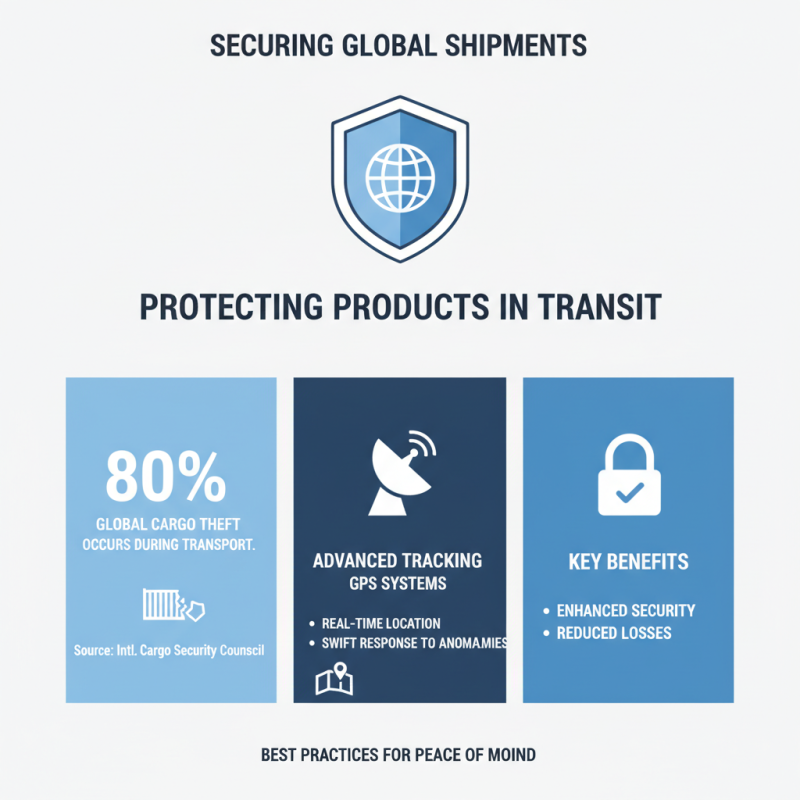
When shipping goods internationally, securing your products during transit is paramount. According to a report by the International Cargo Security Council, over 80% of global cargo theft incidents occur during the transport phase, highlighting the need for best practices in securing shipments. One effective method is utilizing advanced tracking technologies. GPS tracking systems can provide real-time location data, allowing businesses to monitor their shipments closely and respond swiftly to any anomalies or disruptions.
Moreover, implementing robust packaging and labeling strategies is vital for protecting goods. The World Bank's recent logistics report indicates that improper packaging leads to a 19% increase in damage during transportation. Utilizing reinforced packaging materials and clear labeling not only safeguards the products but also expedites the handling process at customs checkpoints. Lastly, ensuring that transport partners adhere to strict security protocols will further reduce the risk of loss or damage. By combining technology, proper packaging, and stringent partner vetting, businesses can significantly enhance the security of their goods during international transport.