How to Optimize Transportation Logistics for Efficient Supply Chain Management
In today's rapidly evolving marketplace, effective transportation logistics plays a pivotal role in optimizing supply chain management. According to a report by the Council of Supply Chain Management Professionals, logistics costs can represent over 10% of a company's revenue, underscoring the critical need for businesses to streamline their transportation processes. With the global logistics market projected to reach $15.5 trillion by 2023, organizations are increasingly recognizing the strategic importance of transportation logistics in reducing costs, improving delivery times, and enhancing customer satisfaction.
The integration of advanced technologies, such as AI and IoT, into transportation logistics has revolutionized the way supply chains operate. A study by Deloitte indicates that companies using analytics in their logistics strategies have reported a 10% reduction in cost and a 20% improvement in service levels. As businesses strive to maintain competitiveness in an era characterized by customer-centric models and just-in-time inventory practices, optimizing transportation logistics emerges as a crucial area for attaining operational excellence. By focusing on the efficient movement of goods, organizations can not only enhance their supply chain responsiveness but also drive substantial growth and profitability in a complex global landscape.
Understanding the Role of Transportation Logistics in Supply Chains
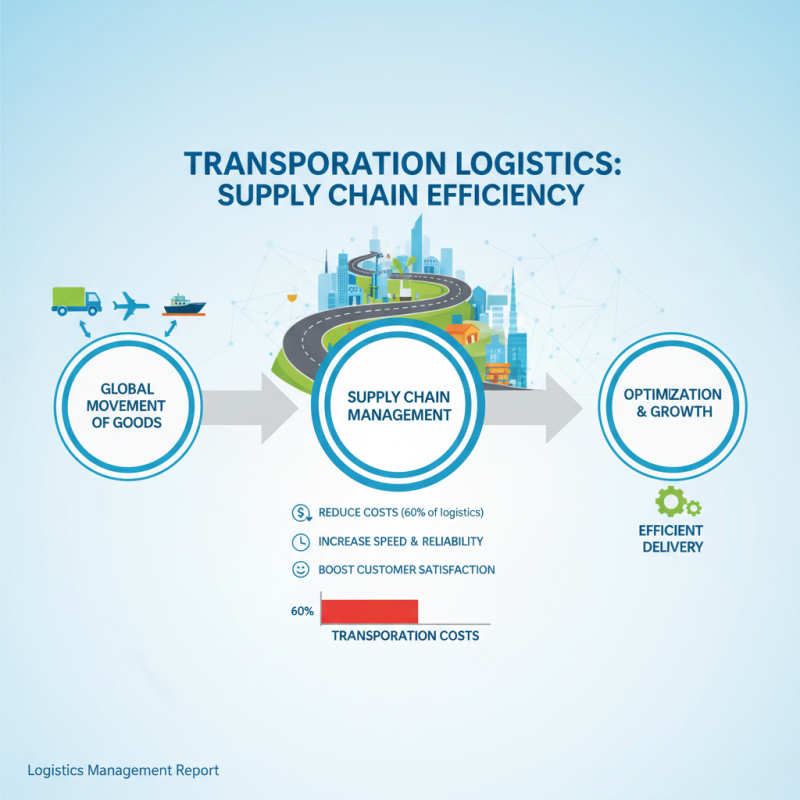
Transportation logistics plays a pivotal role in supply chain management by ensuring that goods move efficiently from one point to another. According to the Logistics Management report, transportation costs can account for over 60% of total logistics costs, emphasizing the need for optimization in this area. Efficient transportation logistics not only helps in reducing these costs but also enhances the overall speed and reliability of the supply chain, ultimately impacting customer satisfaction and retention.
Effective transportation logistics involves strategic planning and execution, which are essential in managing complex networks. A study by the Council of Supply Chain Management Professionals highlights that companies that adopt advanced technology, such as transportation management systems (TMS), can improve delivery times by up to 20% and minimize fuel usage significantly. Furthermore, optimizing routes and consolidating shipments can reduce greenhouse gas emissions and lower operational costs, proving that sustainability and efficiency go hand in hand in modern supply chains. As industries continue to evolve, understanding and improving the role of transportation logistics becomes increasingly crucial for maintaining a competitive edge.
Key Factors Affecting Transportation Logistics Efficiency
Transportation logistics plays a pivotal role in the overall efficiency of supply chain management. Key factors impacting this efficiency include route optimization, inventory management, and technology adoption. According to a report by the Council of Supply Chain Management Professionals, transportation typically represents around 60% of the total logistics costs for companies. By focusing on optimizing routes, businesses can significantly reduce fuel consumption and delivery times. Advanced routing software can help companies achieve a more efficient fleet operation, potentially improving delivery times by up to 15%, as noted in a study by McKinsey & Company.
Additionally, effective inventory management is crucial to achieving a streamlined transportation logistics system. Keeping optimal inventory levels ensures that goods are readily available, reducing lead times and minimizing stockouts. Research from Deloitte indicates that organizations with strong inventory management practices can reduce transportation costs by 10-20%. Furthermore, integrating technology such as real-time tracking systems enhances visibility across the supply chain, allowing for timely adjustments and improving overall logistical efficiency. As highlighted in the 2022 Logistics Management report, companies leveraging technology in their logistics operations can enhance operational performance and foster greater customer satisfaction, ultimately leading to increased competitive advantage.
Strategies for Optimizing Transportation Routes and Schedules
Optimizing transportation routes and schedules is critical for enhancing supply chain efficiency. One effective strategy is the implementation of route optimization software, which uses algorithms to analyze various factors such as traffic conditions, delivery windows, and vehicle capacities. By identifying the most efficient routes, companies can minimize fuel consumption, reduce delivery times, and improve overall customer satisfaction. Additionally, incorporating real-time data analytics allows businesses to adapt quickly to unforeseen circumstances, such as traffic delays or weather changes, ensuring that logistics operations remain on track.
Another essential aspect of optimizing transportation schedules is the integration of demand forecasting tools. By accurately predicting customer demand, businesses can align their transportation schedules with peak delivery times, reducing idle times and ensuring that resources are utilized effectively. Collaborating closely with suppliers and customers further enhances scheduling efficiency, allowing companies to synchronize shipments and avoid last-minute changes that can disrupt the supply chain. By adopting these strategies, organizations can create a more agile and responsive logistics network that meets the evolving needs of the market.
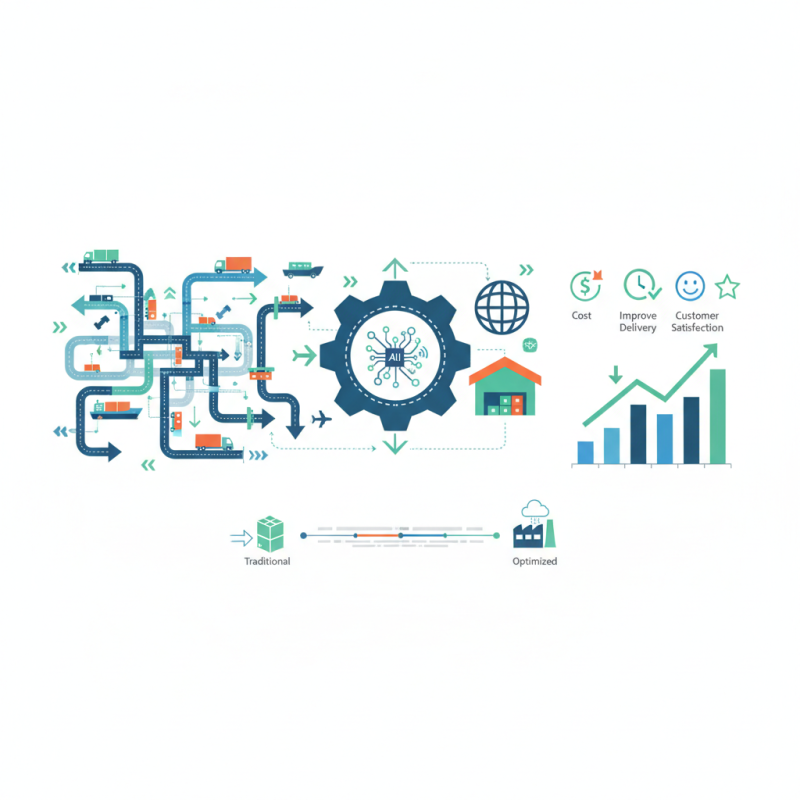
Optimization of Transportation Routes and Schedules
Utilizing Technology for Enhanced Transportation Logistics Management
In the ever-evolving landscape of supply chain management, leveraging technology for enhanced transportation logistics has become pivotal. A recent report by the Council of Supply Chain Management Professionals (CSCMP) indicates that companies utilizing advanced logistics technologies can experience up to a 45% increase in operational efficiency. This technology-driven approach not only streamlines processes but also minimizes costs and enhances visibility across the supply chain.
For instance, the implementation of Transport Management Systems (TMS) allows organizations to optimize route planning and load consolidation, significantly reducing fuel consumption and transit times. According to the 2023 Logistics Management report, companies that adopted TMS solutions saw a 15% reduction in transportation costs within the first year of implementation. Additionally, real-time tracking and data analytics enable businesses to proactively address delays and adapt to changing conditions, ensuring that goods reach their destinations in a timely manner. The adoption of such technologies is no longer a luxury but a necessity for businesses striving to maintain a competitive edge in the market.
Measuring the Impact of Transportation Logistics on Supply Chain Performance
Transportation logistics play a crucial role in the overall performance of supply chain management. To effectively measure its impact, organizations should focus on key performance indicators (KPIs) such as delivery times, transportation costs, and order accuracy. Monitoring these metrics not only helps in assessing the efficiency of logistics operations but also aids in identifying areas for improvement. Regular analysis of these KPIs can reveal patterns that enable businesses to make data-driven decisions, ultimately enhancing supply chain performance.
Tips for optimizing transportation logistics include investing in technology and automation. Utilizing advanced software solutions can streamline routing and scheduling, leading to reduced delays and costs. Additionally, fostering strong relationships with carriers can improve service quality and reliability. Implementing a feedback loop with stakeholders ensures continuous monitoring and adaptation of logistics strategies based on real-time data and market conditions.
Another effective strategy is to prioritize collaboration within the supply chain. Sharing real-time information among suppliers, carriers, and customers creates transparency, which is vital for efficient logistics. This collaborative approach not only minimizes errors but also enhances responsiveness to unforeseen disruptions, thereby boosting overall supply chain agility.
How to Optimize Transportation Logistics for Efficient Supply Chain Management
| Dimension |
Measurement |
Impact on Supply Chain Performance |
| Delivery Time |
Average time in hours |
Directly affects customer satisfaction |
| Transportation Costs |
Cost per shipment in USD |
Lower costs improve profitability |
| Lead Time |
Total days from order to delivery |
Critical for inventory management |
| Order Accuracy |
Percentage of accurate shipments |
Influences customer loyalty |
| Fleet Utilization |
Percentage of fleet capacity used |
Higher efficiency reduces costs |
| Carbon Footprint |
Emissions in tons |
Environmental impact management |