Top Tips for Selecting Heat Resistant Casting Materials?
Selecting the right materials for Heat Resistant Casting can be challenging. Experts emphasize the importance of appropriate choices for ensuring longevity and safety. Dr. Sarah Thompson, a renowned materials engineer, once stated, “Choosing the wrong casting material can lead to catastrophic failures.” This showcases the critical nature of this decision.
Heat Resistant Casting materials are essential for various industries, including aerospace and automotive. They withstand extreme temperatures and harsh environments. Poor selection can result in costly repairs and downtime. Understanding the properties of different materials is crucial. This knowledge helps in making informed decisions.
It is easy to overlook certain aspects when selecting materials. Factors such as thermal expansion and corrosion resistance often play a significant role. Ignoring these characteristics can compromise performance. Reflecting on past experiences can guide future choices. By carefully evaluating options, companies can achieve more reliable outcomes.
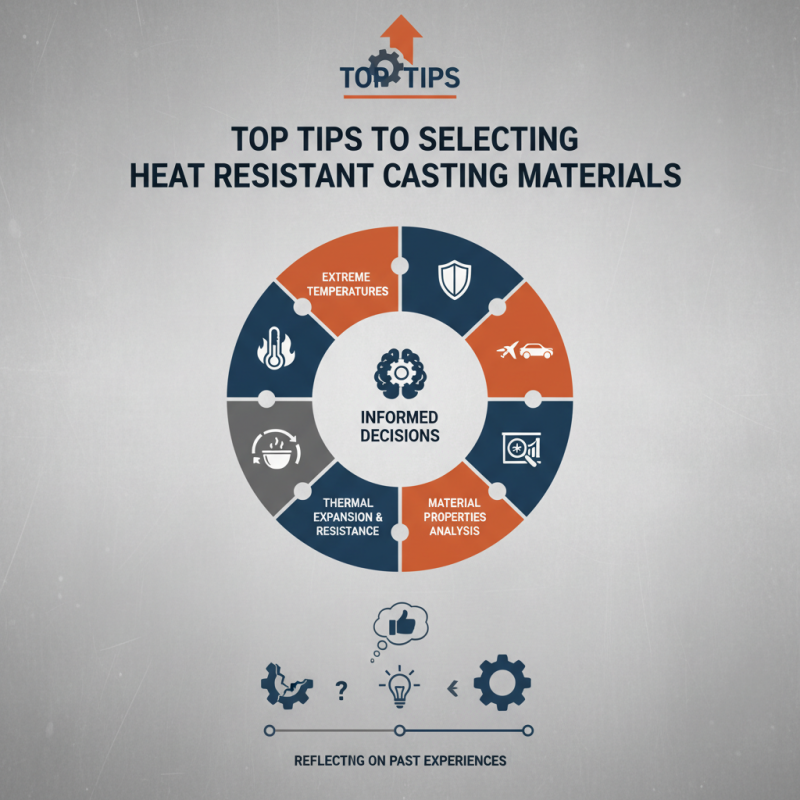
Understanding Heat Resistance in Casting Materials
When selecting heat resistant casting materials, understanding heat resistance is crucial. Heat resistance refers to a material's ability to withstand high temperatures without degrading. This property is essential in many industrial applications, such as automotive and aerospace sectors. Materials such as ceramics, certain metals, and specialized alloys are often favored due to their high thermal stability.
It's important to consider the specific temperature range and environment the materials will encounter. For instance, some materials perform well under static loads but may fail under dynamic stress. Testing for thermal shock resistance can also reveal how materials react to sudden temperature changes. Conducting thorough tests can highlight issues that might not be apparent initially.
Always remember that the right material depends on the application. Mistakes can happen; selecting a material that cannot withstand operational temperatures can lead to catastrophic failures. Look for data sheets and comparable case studies to inform your choices. Gathering insights from real-world applications enhances understanding. Don't rush this process; thoughtful selection can significantly impact performance and safety.
Key Properties to Look for in Heat Resistant Materials
When selecting heat-resistant casting materials, key properties must be prioritized. High thermal stability is essential. Materials that can withstand temperatures exceeding 1000°C are necessary for extreme applications. According to recent industry reports, materials like ceramics and certain metal alloys excel in these conditions. They exhibit low thermal expansion, minimizing distortion and cracking when exposed to heat.
Thermal conductivity is another important factor. Casting materials with low thermal conductivity can prevent heat transfer, protecting adjacent components. A report from the International Journal of Heat and Mass Transfer highlights that materials like silicon carbide have a conductivity of approximately 120 W/mK, which is optimal for thermal management. This low conductivity aids in maintaining the integrity of complex structures.
Lastly, mechanical strength at elevated temperatures cannot be overlooked. As temperatures rise, many materials become weaker. For instance, materials must retain their strength above 500°C to ensure structural stability. Data shows that titanium alloys maintain up to 80% of their strength at these temperatures. This balance of strength, thermal stability, and thermal management is crucial in selecting ideal casting materials for high-temperature applications. It's important to continually assess material performance in real-world scenarios, as theoretical data alone may not address all practical challenges.
Common Types of Heat Resistant Casting Materials
When selecting heat-resistant casting materials, it is vital to understand the common types available. These materials have unique properties that make them suitable for high-temperature applications. One popular option is ceramic casting. Ceramics can withstand extreme temperatures and resist thermal shock. However, they may be more fragile than other materials. This is something to consider during the design phase.
Metal alloys also play a significant role in heat-resistant casting. Alloys like nickel and cobalt demonstrate excellent high-temperature strength. They can be used in aerospace and automotive industries. Yet, these materials can be challenging to work with, requiring precise heating and cooling techniques. Proper handling and preparation are essential.
Another option is graphite. It is lightweight and offers thermal stability. Graphite casting is commonly used for applications like electric furnaces. However, its mechanical strength might not be as high as other materials. Factors such as cost and availability can affect decisions as well. Each material has pros and cons. Knowing the specific application helps in making the right choice.
Factors Affecting the Selection of Casting Materials
Selecting heat-resistant casting materials requires careful consideration of various factors. The application’s operating temperature is crucial. Materials must withstand not just heat but also thermal shock. Each casting material has specific thermal limits that should not be exceeded. For instance, aluminum may not perform well in extremely high temperatures compared to other metals.
Surface finish and complexity also influence material choice. Different casting methods yield varying surface qualities. A smoother finish can lead to better performance. However, simpler designs often translate to faster production times. It’s essential to balance aesthetics, functionality, and manufacturability.
Another aspect to consider is the material’s thermal conductivity. High conductivity materials can dissipate heat effectively, but they could deform under stress. It’s worth evaluating long-term performance versus short-term gains. Sometimes, a less conventional choice may offer better results. Understanding the specific requirements of your project is key. The right selection can significantly impact durability and efficiency.
Top Tips for Selecting Heat Resistant Casting Materials
| Material Type | Melting Point (°C) | Thermal Conductivity (W/m·K) | Applications | Corrosion Resistance |
| Stainless Steel | 1400-1450 | 16-25 | Oil & Gas, Chemical Processing | High |
| Nickel Alloys | 1200-1400 | 15-22 | Aerospace, Marine | Very High |
| Cast Iron | 1100-1300 | 50-70 | Automotive, Machinery | Moderate |
| Ceramic Materials | 1600-1800 | 10-20 | Aerospace, Power Generation | High |
| Aluminum Alloys | 600-660 | 205-235 | Automotive, Aerospace | Moderate |
Best Practices for Testing and Evaluating Heat Resistance
When selecting heat-resistant casting materials, proper testing is crucial. Testing evaluates how well materials perform under extreme temperatures. This is essential for industries like aerospace and automotive, where failures can have serious consequences.
Conduct thermal cycling tests. These tests expose materials to varying temperatures repeatedly. Observe how they react over time. Look for cracks or deformations. Use this information to assess reliability.
Consider material composition carefully. Different alloys and ceramic materials have unique heat resistance properties. It’s vital to understand each material's limits. Make informed choices based on detailed performance data.
Always document your findings. This practice builds a reference for future projects. It helps others avoid common pitfalls. Reflect on test results, and adjust methodologies accordingly. Continuous improvement leads to better outcomes.
