Top 10 Customs Broker Fees You Need to Know About?
When engaging in international trade, understanding customs broker fees is essential. These fees can significantly impact your overall costs. Many businesses overlook these expenses during their logistics planning. This article highlights the top ten customs broker fees you need to know about.
Customs broker fees vary widely depending on services rendered. Some brokers charge a flat fee, while others may base fees on the shipment's value. Additional charges often arise from paperwork, handling, and expedited services. Understanding these nuances can help in budgeting your logistics expenses.
Navigating customs broker fees can be challenging. Not all brokers provide clear information upfront. This ambiguity can lead to unexpected costs. Being informed about common fees ensures you make better decisions. It’s crucial to communicate with your broker to clarify potential hidden charges.
Understanding Customs Broker Fees and Their Importance
Understanding customs broker fees is essential for anyone involved in importing and exporting goods. These fees can vary widely, impacting overall costs. Typically, they include service fees, filing fees, and disbursement fees. Each of these plays a role in ensuring shipments clear customs efficiently. A service fee is often a flat rate, but it can depend on the complexity of the transaction. This is crucial because higher complexity may lead to unanticipated costs.
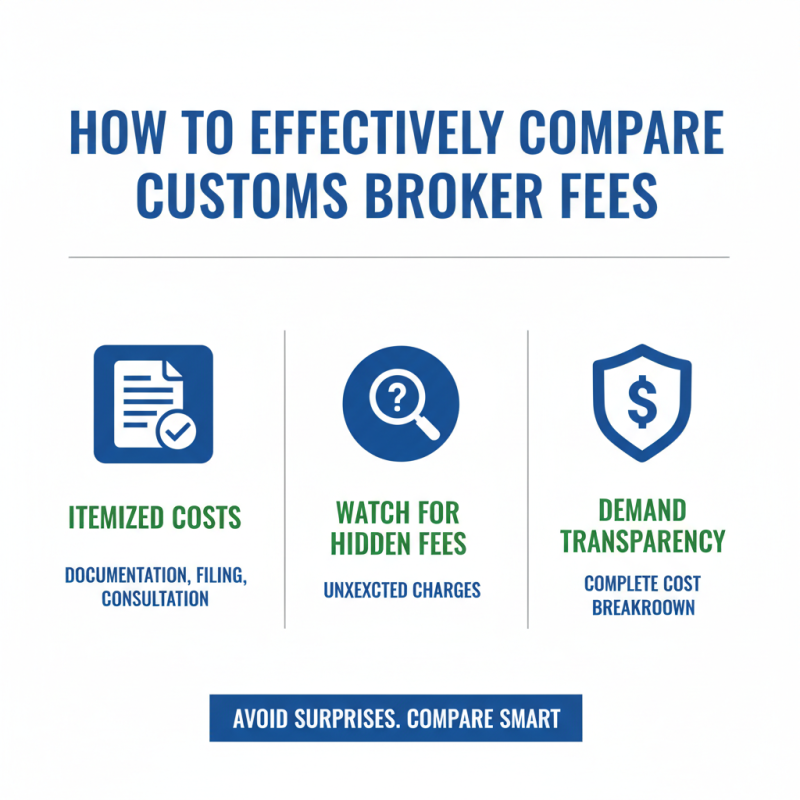
It's interesting to note that not all customs brokers charge the same fees. Some may have hidden costs that catch clients off guard. For instance, communication fees for updates are common yet not always mentioned upfront. It’s vital for businesses to clarify all fees before engaging a broker. Often, clients overlook these details, leading to frustration later. Failure to understand these elements can hurt a company's budget and broaden operational risks. Always ask for a detailed breakdown to avoid surprises.
Common Types of Customs Broker Fees You May Encounter
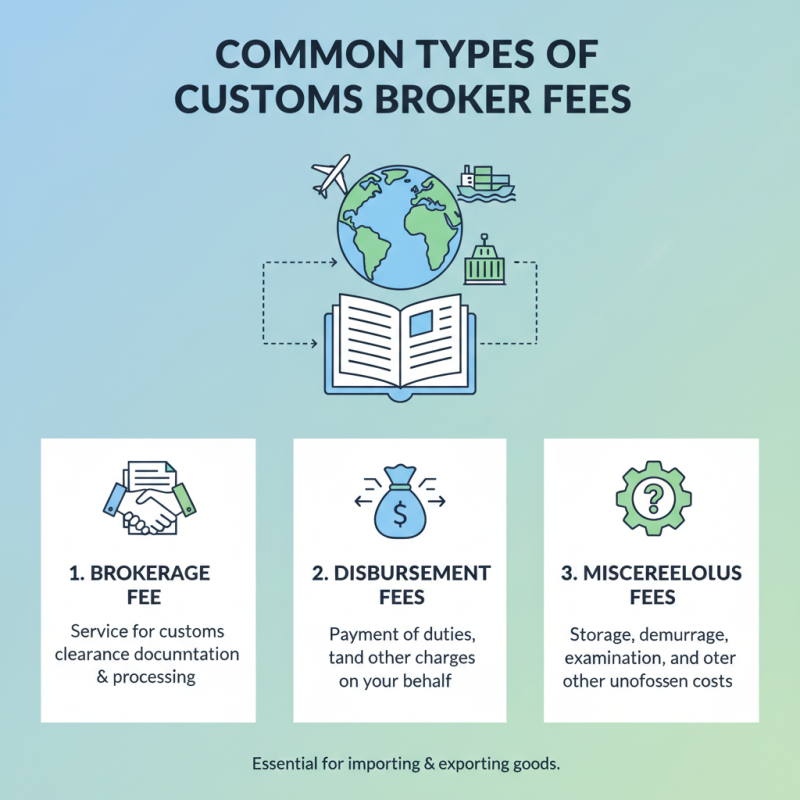
When importing or exporting goods, understanding customs broker fees is essential. These fees can vary widely. Some are fixed, while others fluctuate based on a variety of factors. One of the most common fees is the brokerage fee. This is the charge for the broker's services in handling your customs clearance.
Another fee you may encounter is the customs duty. This tax is based on the value of the goods being imported. It can be a significant cost. Additionally, there are fees for document preparation. Brokers often charge to prepare the necessary paperwork. These fees can add up quickly, and they are sometimes overlooked.
Keep an eye out for additional charges, such as storage fees. If your goods are delayed in customs, storing them might incur extra costs. Also, consider consultation fees. Some brokers may charge for advice or assistance with compliance. Being aware of these potential fees can help you budget more accurately. It’s worth reflecting on your broker’s transparency regarding these charges. Knowing this can save you from unexpected expenses down the line.
Factors Influencing Customs Broker Fee Structures
When dealing with customs broker fees, understanding the factors that influence these fees is essential. Various elements come into play, impacting overall costs. The complexity of the shipment is a major factor. For example, if a product requires specific documentation, fees may increase. According to industry reports, detailed shipments can incur up to 30% higher fees due to this documentation requirement.
Another critical aspect is the geographical location of the customs broker. Brokers in major ports or metropolitan areas often charge more. A recent survey indicated that brokers in New York and Los Angeles could have fees up to 25% higher than those in smaller cities. This discrepancy can result from higher operational costs and demand for services. The type of goods imported also plays a role. Certain items, like perishables or high-value electronics, can create additional expenses in handling and customs regulations.
Additionally, the level of service provided can significantly impact the fee structure. Not all brokers offer the same level of consultation and support. Some may charge extra for personalized service, which can be both beneficial and costly. Statistics show that transparency in fee structures can lead to a 20% reduction in misunderstandings between clients and brokers. However, many businesses often overlook this, leading to unexpected costs. Understanding these influences can help in budgeting for customs broker fees effectively.
Top 10 Customs Broker Fees You Need to Know About
Tips for Reducing Customs Broker Costs in Shipping Operations
When it comes to shipping operations, customs broker fees can add up quickly. Understanding these costs is essential. One effective way to reduce expenses is to assess your shipping needs thoroughly. By analyzing your shipment frequency and volume, you can choose a broker who specializes in your specific requirements.
Another useful tip is to maintain accurate documentation. Providing complete and precise paperwork helps your broker work more efficiently. This can reduce delays and avoid additional charges. Sometimes, even minor errors can lead to significant costs. Clear communication with your customs broker is vital; this ensures you both understand the requirements involved.
Consider consolidating shipments whenever possible. By combining orders, you may lower per-shipment fees. This approach can be beneficial if you're shipping similar products frequently. While it might seem tedious to coordinate, the savings can be worth the effort. Avoiding the pitfalls of vague agreements can also lead to better pricing. Prioritize clarity in your discussions with brokers to navigate potential misunderstandings.