In today’s fast-paced global market, finding the right logistic transfer solutions is essential for businesses aiming to thrive. With the growing complexity of supply chains, effective logistics is more crucial than ever. Companies must identify reliable partners to ensure timely delivery and efficient cost management.
The year 2026 promises innovative approaches to logistic transfer, driven by advanced technology and evolving consumer demands. Global buyers need to keep a keen eye on trends. Solutions like real-time tracking and automation are reshaping how goods move across borders. However, it's important to recognize the challenges in adapting to these advancements.
While many solutions exist, not all are equally effective. Buyers must evaluate which options align with their specific needs. There is a risk of oversaturating logistics networks without proper research. Hence, understanding the nuances of logistic transfer becomes vital for long-term success.

As we approach 2026, logistics transfer solutions are evolving rapidly. The integration of artificial intelligence stands out as a significant trend. AI is enhancing route optimization, thereby reducing transit times. Predictive analytics also plays a role in demand forecasting. With these advancements, companies can better prepare for changes in consumer behavior.
Sustainability is another crucial factor. Businesses are seeking eco-friendly solutions. Electric vehicles and renewable energy sources are gaining traction in logistics. However, this transition is often slower than anticipated. Many organizations struggle with high upfront costs and infrastructure challenges. This reality prompts a need for innovative financing solutions and stronger collaboration among stakeholders.
Additionally, digitalization continues to reshape logistics. Automation is streamlining operations, but not without hurdles. Workforce retraining is necessary as roles change. Many employees feel insecure about their positions. Open discussions about these changes can foster a more resilient workforce. Embracing these trends will be essential for companies aiming to thrive in the evolving logistics landscape of 2026.
The logistics industry is undergoing transformative changes driven by innovative technologies. A report from McKinsey indicates that digital logistics could increase efficiency by up to 30%. Automation is reshaping warehouses, leading to faster processing times and reduced human error. However, the adoption of robotics also requires careful planning and staff training.
Artificial intelligence (AI) plays a critical role in this evolution. AI-powered analytics can optimize routes, minimizing fuel costs and delivery times. According to industry data, companies adopting AI in logistics experience a 15-20% reduction in operational costs. Yet, integrating AI poses challenges. Companies must ensure data accuracy and security.
Blockchain is another game-changer in enhancing transparency. It provides a secure method for tracking shipments and verifying transactions. Studies show that over 70% of logistics professionals recognize blockchain's potential to improve trust. However, the technology is still in its infancy, facing scalability and regulatory hurdles. Embracing these advancements while addressing their limitations is essential for future growth.
| Technology | Description | Benefits | Implementation Challenges |
|---|---|---|---|
| Blockchain Technology | A decentralized ledger technology that enhances transparency and reduces fraud. | Increased trust, improved traceability, reduced operational costs. | Integration complexity, high initial investment. |
| Internet of Things (IoT) | Devices connected to the internet to provide real-time data about logistics operations. | Enhanced visibility, real-time tracking, predictive maintenance. | Data security issues, interoperability of devices. |
| Artificial Intelligence (AI) | Using algorithms and data analytics to optimize logistics processes and decision-making. | Improved efficiency, cost savings, smarter routing. | Skill gap, data quality issues. |
| Autonomous Vehicles | Self-driving vehicles designed for transporting goods without human drivers. | Reduced labor costs, increased efficiency, enhanced safety. | Regulatory hurdles, technological risks. |
| Robotics | Use of robotic systems for tasks such as sorting, packing, and transporting goods. | Increased speed, accuracy, and reduced operational costs. | High initial costs, ongoing maintenance requirements. |
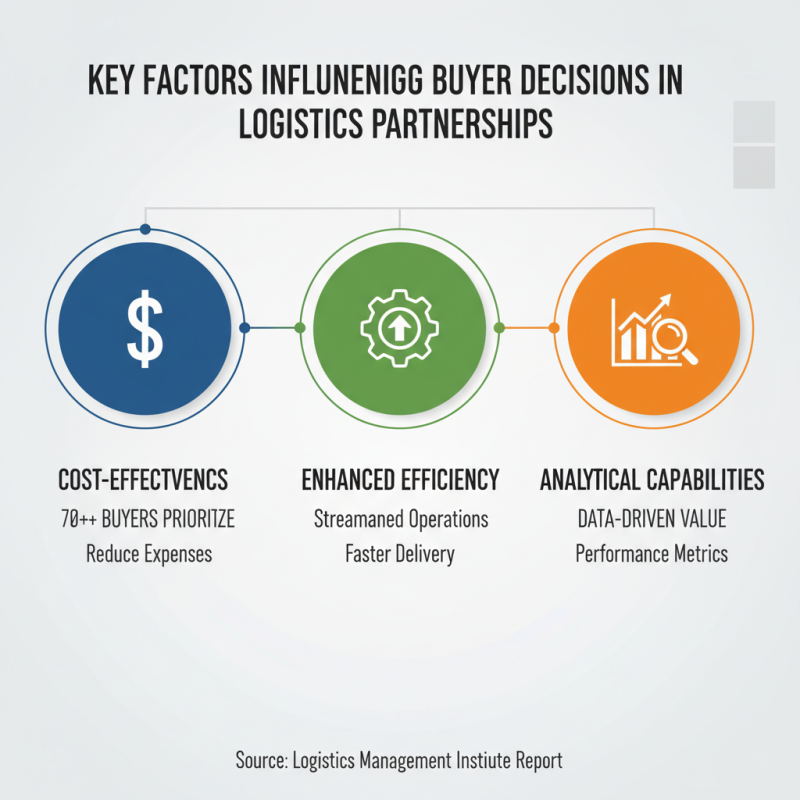
In the logistics sector, buyer decisions hinge on several key factors. According to a report by the Logistics Management Institute, over 70% of buyers prioritize cost-effectiveness in their partnerships. They seek solutions that not only reduce expenses but also enhance efficiency. This necessitates strong analytical capabilities from logistics providers to demonstrate value clearly.
Speed and reliability are also critical. Data from the Council of Supply Chain Management Professionals shows that 85% of buyers evaluate a partner's track record for on-time deliveries. Delays can significantly impact a company's reputation and customer satisfaction. Advanced tracking technologies and real-time communication play a vital role in meeting these expectations.
Sustainability is gaining traction. A recent report revealed that 60% of global buyers consider a supplier's environmental impact when making decisions. Yet, many logistics firms struggle to integrate sustainable practices effectively. This gap presents an opportunity for providers willing to innovate. Balancing sustainability with cost and reliability remains a complex challenge for many in the industry.
Sustainable logistics is no longer optional; it's essential. According to the 2023 Global Logistics Report, over 70% of companies face pressure to adopt green practices. Efficient transportation helps reduce carbon footprints significantly. Many logistics firms are investing in electric vehicles and renewable energy sources. A commitment to environmentally friendly solutions can also enhance brand reputation.
Tips: Assess your carbon footprint regularly. Explore partnerships with eco-conscious suppliers. These actions support both the planet and your bottom line.
Moreover, the shift towards circular logistics is gaining momentum. This process emphasizes recycling and reusing materials. Reports show that businesses practicing circular logistics can achieve cost reductions of up to 30%. However, the implementation can be challenging. Some companies struggle with integrating these practices into existing frameworks.
Tips: Start small with pilot programs. Monitor results before rolling out large-scale changes. Continuous adaptation fosters both sustainability and efficiency.
The logistics sector is witnessing a shift in focus towards emerging markets. Countries in Southeast Asia and parts of Africa are gaining attention. These regions offer unique opportunities for logistics transfer solutions. Rapid urbanization is driving demand for efficient supply chains.
Regional factors play a significant role in shaping these markets. For example, infrastructure development is often inconsistent. This can create both challenges and opportunities for logistics providers. There is a growing need for tailored solutions that address local needs, such as last-mile delivery services. Cultivating partnerships with local businesses can enhance reliability and responsiveness.
Furthermore, regulatory issues pose another hurdle. Logistics companies must navigate various compliance requirements. This complexity can lead to delays or increased costs. However, successful operations in emerging markets often hinge on adaptability and innovation. Investing in technology can streamline processes and improve transparency. As logistics continues to evolve, understanding these regional nuances is crucial for success.