What is a Transport Broker and How to Choose the Best One?
In the complex world of logistics, a transport broker plays a crucial role. According to industry expert Sam Johnson, “A good transport broker can turn logistics challenges into opportunities.” This underscores the importance of selecting the right broker. With the right partner, businesses can navigate shipping efficiently.
Choosing a transport broker involves considering several factors. Expertise in the industry is essential. Brokers should have strong relationships with carriers. This helps in negotiating better rates. An understanding of your specific needs is necessary as well. Not all brokers provide the same services. Some may focus on local deliveries, while others might specialize in international shipping.
It is not uncommon to feel overwhelmed when selecting a transport broker. The sheer number of options can be daunting. Mistakes made during this process can lead to delayed shipments or increased costs. Therefore, evaluating brokers carefully is essential. Finding one that aligns with your business needs may require introspection and research.

What Is a Transport Broker?
A transport broker plays a vital role in logistics. They connect shippers with carriers. This relationship ensures smooth transportation of goods. Brokers understand market rates and can negotiate better deals. They save time and reduce stress for businesses.
When choosing a transport broker, consider several factors. Experience is crucial. Look for brokers with a good reputation. They should have a network of reliable carriers. Communication skills matter too. A broker must keep you informed about your shipment's status.
**Tips:** Check online reviews to get feedback from other clients. Ask for references to gauge reliability. It’s also wise to evaluate their technology. A good transport broker uses advanced tracking systems. This transparency can help manage expectations.
Another important aspect is pricing. Not every broker offers the same rates. Sometimes, lower rates come with less service. Weigh the pros and cons carefully. Mistakes in this area can lead to delays. Evaluate what you really need from the broker. This clarity can prevent misunderstandings later on.
Transport Broker Services Comparison
This chart displays a comparison of key service metrics for transport brokers, including service quality, response time, rates, technology, and customer support. The ratings are out of 100, providing a clear view of different aspects of service performance.
Key Responsibilities of a Transport Broker
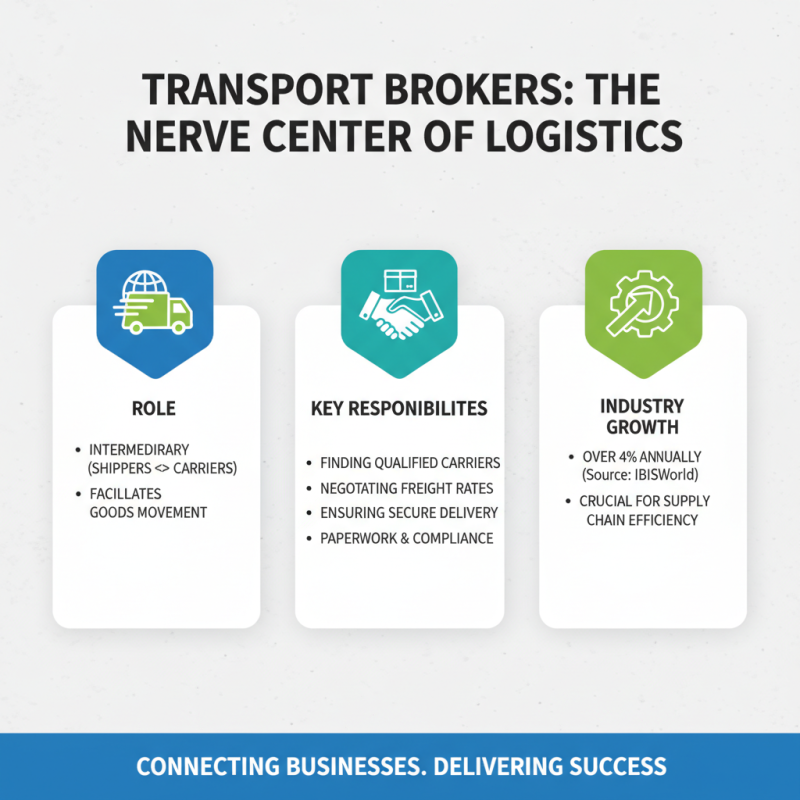
Transport brokers play a crucial role in logistics and supply chain management. They act as intermediaries between shippers and carriers. Their key responsibilities include finding carriers, negotiating rates, and ensuring the safe delivery of goods. According to a report by IBISWorld, the transport brokerage industry has seen a growth of over 4% annually, highlighting its importance in today's economy.
A transport broker must assess the needs of their clients. They need to identify the best shipping solutions. This involves understanding various modes of transport. The broker should also have extensive knowledge of industry regulations and compliance standards. In an industry where 70% of shipments depend on truck transportation, choosing an experienced broker is vital. Many brokers struggle to provide real-time tracking, which can leave clients in the dark.
Effective communication is another key area for transport brokers. They need to relay information between shippers and carriers clearly. Delays and miscommunication can lead to significant losses. A study from FreightWaves found that over 30% of brokers fail to maintain consistent updates, affecting service quality. This serves as a reminder for shippers to select brokers who prioritize transparency.
Criteria for Choosing the Right Transport Broker
When choosing a transport broker,
it's essential to evaluate their experience.
Look for brokers with a track record in your specific industry. They must understand unique transport needs.
An experienced broker can navigate challenges better, saving you time and stress.
Another important aspect is communication.
The right broker should be responsive and transparent. They need to provide updates regularly.
If communication feels off, it's a red flag. Trust your instincts here.
A reliable broker should make you feel informed and secure throughout the process.
Lastly, consider their network.
A well-connected broker has access to a variety of carriers.
This allows for flexible solutions tailored to your needs.
If they can’t offer multiple options, rethink your choice.
Variety often leads to better prices and services.
A broker who fits your needs will pay off in the long run.
Common Questions to Ask When Selecting a Transport Broker
Choosing the right transport broker can be challenging. Asking the right questions is a crucial step. For instance, inquire about their experience in your specific industry. Longevity doesn’t always guarantee quality, but familiarity may help.
Another key question is about their communication style. Clear communication fosters good relationships. Ask how they handle updates and concerns. Do they provide timely status updates? This matters, as delays can affect your logistics.
Also, consider their network. A robust network of carriers can lead to more efficient transport solutions. Ask about their vetting process for carriers. Understanding this can reveal much about their reliability. Finally, don’t hesitate to assess their technology. Is it user-friendly? An effective system can streamline your shipping processes.