2026 Top Transport Services for Global Buyers?

Choosing among the 2026 top transport services requires more than comparing prices. Global buyers need dependable movement, clear communication, and measurable delivery performance. A delayed container can stop a production line, leave shelves empty, or damage a supplier relationship. Small details matter. Scan accuracy matters. So does the response at 2 a.m.

Yossi Sheffi, an internationally recognized supply-chain expert, emphasizes, “Resilience is the ability to recover from disruptions.” His view is highly relevant for buyers facing port congestion, severe weather, fuel changes, and shifting trade requirements. The strongest transport services should offer multimodal options, real-time tracking, secure documentation, and trained local partners. They should also demonstrate experience with customs procedures and responsible international operations. Claims need evidence. Buyers should request performance data, insurance details, service coverage, and references from comparable industries.

This introduction examines leading providers through a practical global-buyer lens. It considers reliability, digital visibility, delivery speed, pricing transparency, sustainability, and customer support. A perfect ranking is impossible. Each supply chain has different risks, volumes, and destinations. That is the uncomfortable part. A low-cost provider may create expensive delays, while a premium service may not fit every shipment. I may overlook a regional specialist, too. Therefore, readers should test these findings against their own routes, products, and supplier agreements. The best choice is not always the largest company. It is the partner that performs consistently when conditions become difficult.
2026 Top Transport Services for Global Buyers?

What Transport Services Mean for Global Buyers in 2026

2026 Top Transport Services for Global Buyers?

What Transport Services Mean for Global Buyers in 2026

In 2026, transport services mean more than moving cartons between ports. They connect purchasing decisions, delivery timing, compliance, and customer trust. Global buyers now expect clear shipment data before goods leave the warehouse.

A reliable service should provide route planning, cargo visibility, and practical risk controls. Buyers may compare ocean, air, rail, road, and multimodal options for each order. A small electronics shipment might need air freight, temperature control, and secure handling. Heavy machinery may require rail transport, reinforced packaging, and a scheduled port transfer.

Documentation matters just as much. Accurate invoices, product descriptions, origin records, and delivery terms can prevent avoidable delays. Experienced logistics teams also check customs requirements before booking transport. This step sounds simple. It is often missed.

Digital tracking can show a container’s location, estimated arrival, and exception alerts. Still, data is not always perfect. Signals may disappear at sea, and estimated times can change after storms or port congestion. Buyers should ask how delays are reported and who makes urgent decisions.

Sustainability is also becoming part of transport evaluation. Some buyers measure emissions, fuel use, packaging waste, and empty return journeys. Lower emissions may require slower routes or consolidated shipments. That trade-off deserves honest discussion.

Transport services are useful only when they match the cargo, destination, budget, and compliance needs. A cheaper quote can become expensive after storage fees and missed production schedules. Careful buyers review the full delivery process, not just the initial freight price.

2026 Top Transport Services for Global Buyers

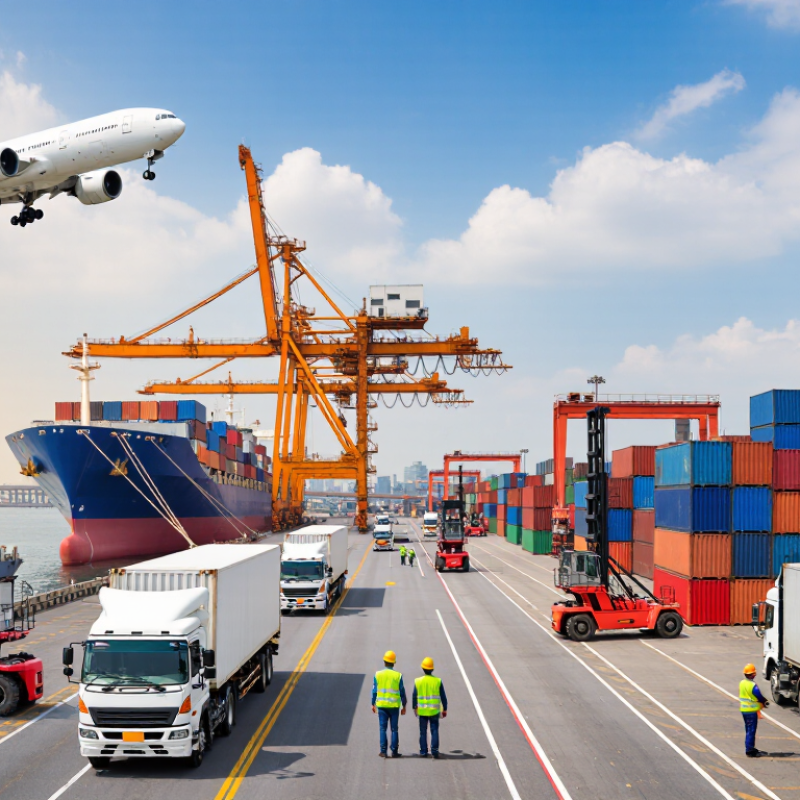
Ocean shipping remains the dominant option for global merchandise by volume, while road, rail, and air services support regional distribution, time-sensitive orders, and higher-value cargo.

Indicative global merchandise transport mix by physical volume: maritime transport approximately 80%, road transport approximately 15%, rail transport approximately 4%, and air transport approximately 1%. Percentages are rounded planning benchmarks based on widely reported international trade and transport statistics.

Which Transport Modes Serve Different International Shipping Needs

2026 Top Transport Services for Global Buyers?

Which Transport Modes Serve Different International Shipping Needs

International shipping works best when the transport mode matches the cargo, deadline, and destination infrastructure. Ocean freight suits large, non-urgent consignments, such as furniture, machinery, or packaged materials. It usually costs less per unit, but port congestion can add several days. Air freight serves samples, medical equipment, and seasonal electronics. The trade-off is clear. Capacity is limited, and charges rise with weight.

Road transport offers flexible door-to-door delivery across nearby countries and regional trade corridors. It works well for smaller loads, scheduled replenishment, and temperature-sensitive goods when suitable equipment is available. Rail can handle heavier cargo over long land routes with more stable fuel efficiency than road transport. However, rail schedules and border transfers may be less flexible. Multimodal shipping combines sea, rail, road, or air to balance cost and speed. It can reduce handling pressure, though every transfer creates another coordination point.

Reliable planning starts with accurate cargo dimensions, declared weight, delivery terms, and destination details. Poor measurements can cause unexpected fees. A practical shipment plan should compare transit time, handling risk, insurance needs, and tracking quality. No mode is perfect. A cheaper route may become expensive after storage, delays, or repacking. Buyers should also confirm packaging strength, document readiness, and the carrier’s response process before cargo leaves the warehouse. Even experienced teams sometimes underestimate seasonal congestion. That deserves a second review.

How to Compare Speed, Cost, Coverage, and Reliability

2026 Top Transport Services for Global Buyers
How to Compare Speed, Cost, Coverage, and Reliability
Speed should match the product, not the sales promise.
Air freight can protect urgent, high-value shipments, while ocean transport suits heavier cargo and planned replenishment. IATA reported that global air-cargo demand increased 11.3% in 2024, showing strong pressure on limited capacity. That growth can raise prices during seasonal peaks. Ask for transit time, customs handling time, and the percentage of shipments arriving on schedule.
Cost needs a wider lens.
Compare the full landed cost, including pickup, fuel adjustments, duties, storage, insurance, and delivery to the final address. UNCTAD reports that maritime transport carries over 80% of global trade by volume. It remains efficient for large consignments, but port congestion can erase the expected savings. A low quote is not always economical.
Coverage is more than a map.
Check service in the origin country, destination region, remote areas, and key trade corridors. The World Bank’s Logistics Performance Index 2023 surveyed logistics professionals across 139 economies, highlighting major differences in customs, infrastructure, and delivery capability. Reliability should be measured through on-time performance, damage rates, tracking quality, and response time after an exception. I would also test a small shipment first. Real performance can disappoint. One missed scan or unclear invoice may reveal weaknesses that polished proposals hide.

Which Providers and Service Models Lead Global Buyer Transport

For global buyers, the leading transport providers are not simply the cheapest carriers. They combine international forwarding, customs coordination, warehousing, and shipment visibility through one accountable service model. The World Bank’s 2023 Logistics Performance Index shows that reliability, tracking, and delivery timeliness remain major differences between logistics markets. A provider that gives buyers one control tower, milestone alerts, and a named exception manager can reduce daily uncertainty.

Multimodal 3PL and 4PL models are gaining attention. Sea transport still carries over 80% of global merchandise trade by volume, according to UNCTAD’s Review of Maritime Transport. Yet ocean freight alone cannot solve inland delays. Strong providers connect vessels, rail, trucks, and local storage, then adjust routes when ports become congested. Digital freight platforms help compare schedules and capacity, but software is not a substitute for experienced operators.

Service quality needs proof. Ask for historical on-time performance, damage rates, claim response times, and customs-document accuracy. A monthly dashboard is useful, but imperfect data can hide missed handovers. The best model may be hybrid: centralized planning with regional teams that understand local roads, ports, and working practices. Buyers should test this structure on one lane before expanding. Cheap transport can become expensive when inventory waits beside a warehouse door.

How Technology and Sustainability Are Reshaping Transport Services

In 2026, global buyers will judge transport services by visibility, emissions, and resilience—not price alone. Digital freight platforms now combine shipment tracking, predictive arrival times, and automated customs data. These tools reduce blind spots between a factory gate and a distribution center. The World Bank’s Logistics Performance Index 2023 connects reliable tracking and tracing with stronger logistics performance. Yet technology is not magic. Data still breaks. A delayed scan can still mislead a buyer.

Sustainability is becoming operational, not decorative. The International Energy Agency reported nearly 14 million electric cars sold worldwide in 2023, representing about 18% of new car sales. Freight fleets are moving more slowly because batteries, charging access, and payload limits remain difficult. Buyers should request route-level emissions data, fuel assumptions, and evidence behind carbon claims. The Global Logistics Emissions Council framework offers a practical basis for comparing freight emissions. Better measurement matters.

Sea and air choices also need closer scrutiny. UNCTAD’s Review of Maritime Transport 2024 projected maritime trade growth of about 2% in 2024, while disruptions exposed the cost of fragile routes. In practice, a lower-carbon option may take longer or require transshipment. Trade-offs remain. My view is cautiously optimistic. Digital systems can support cleaner decisions, but only when humans challenge incomplete data and suppliers disclose uncomfortable details.

Go to Top