2026 How to Achieve Efficient Transport for Global Trade?
Efficient transport is a crucial element in the realm of global trade. As economies become more interconnected, transportation systems must keep pace. However, achieving efficiency in transport requires more than just streamlined logistics. Countries face challenges like infrastructural gaps, regulatory barriers, and fluctuating fuel costs. These issues can hinder trade and increase costs.
The rise of digital technologies presents opportunities for improvement. Innovations in AI, IoT, and big data can enhance tracking and efficiency. Yet, reliance on technology also brings risks. Cybersecurity threats can disrupt transport networks, posing challenges for reliability. Balancing innovation with security becomes essential for creating robust transport systems.
Addressing the nuances of efficient transport will require collaboration across borders. Governments and private sectors must work together. Stakeholders should share best practices and understand regional needs. Only through this effort can we build a transport framework that meets the demands of global trade.
Understanding the Importance of Efficient Transport in Global Trade
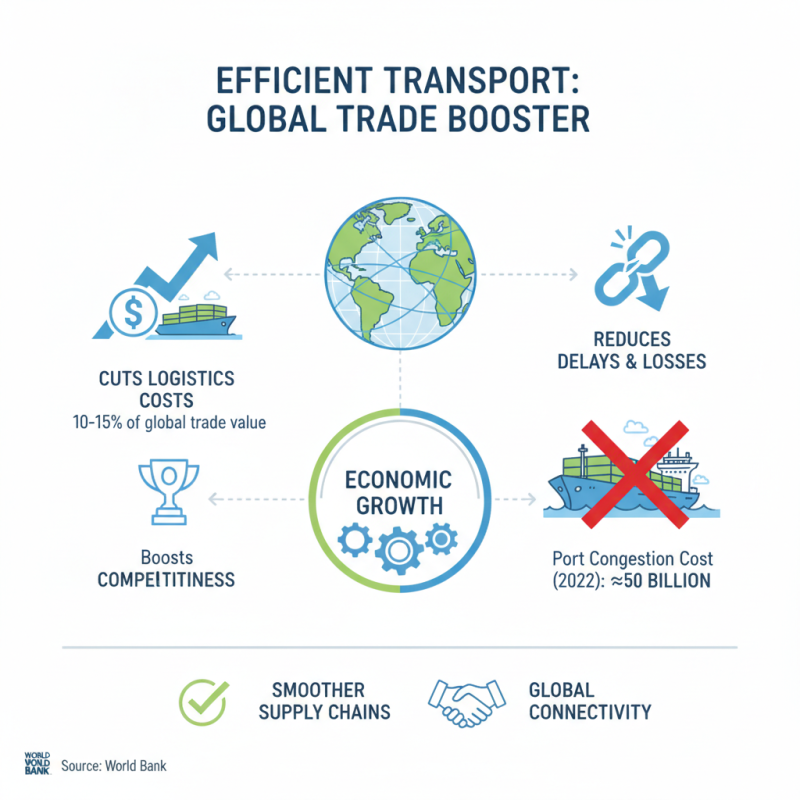
Efficient transport plays a crucial role in global trade, impacting economic growth. According to the World Bank, logistics costs can account for 10-15% of global trade value. Reducing these costs can significantly enhance competitiveness. In 2022, port congestion cost the global economy approximately $50 billion. Efficient transport solutions are essential to address these challenges.
The importance of diverse transport modes cannot be understated. A study by the International Transport Forum highlights that combining air, sea, and rail transport can reduce transit times. For instance, multimodal logistics can shave off 20% of shipping times. However, reliance on a single mode may lead to bottlenecks, making flexibility crucial. Companies need to adapt to changing situations, but many struggle with this.
Sustainability is another pressing issue in transport. A report from the International Maritime Organization shows that maritime transport contributes nearly 3% of global greenhouse gas emissions. Adopting cleaner technologies is vital. However, the transition is slow and often costly. The challenge lies in balancing efficiency, cost, and environmental responsibility. This complex scenario demands ongoing reflection and improvement in transport practices.
Key Challenges Facing Global Transport Systems Today
Global transport systems face several key challenges in today’s interconnected landscape. Inefficient logistics networks lead to delays. These delays increase costs and disrupt supply chains. Climate change adds pressure as we seek sustainable solutions. Transport emissions are a significant concern for many nations.
Infrastructure limitations pose another hurdle. Many ports and highways struggle with congestion. Aging facilities require modernization to handle growing volumes. Additionally, the digital divide affects access to technology in less developed regions. This undermines efficiency in global trade.
Security risks complicate the transport landscape as well. Increased cyber threats target logistics systems, endangering data integrity. Companies often grapple with compliance issues across different countries. These complexities demand urgent attention. Balancing efficiency and security remains a challenge for global transport.
2026 How to Achieve Efficient Transport for Global Trade?
This chart illustrates the key challenges facing global transport systems today, including Infrastructure, Regulation, Environmental Impact, and Technology Adoption.
Innovative Technologies Transforming Transport Efficiency
Innovative technologies are reshaping the transport landscape, significantly enhancing efficiency in global trade.
Automation is now prevalent in logistics. According to a report by McKinsey,
supply chain companies that adopt automation can increase productivity by 20-30%.
Technologies like automated guided vehicles and drones are streamlining operations. This means quicker delivery and reduced human labor costs.
Data analytics plays a crucial role in optimizing transport routes. By leveraging big data, companies can predict demand and adjust their logistics accordingly.
A study from the World Economic Forum highlights that predictive analytics can lead to a 10-15% reduction in transportation costs.
Yet, implementing these technologies is not without challenges. Many organizations struggle with data integration and the skills gap in the workforce.
Blockchain has emerged as a tool for transparency and security. It can reduce fraud and improve documentation efficiency.
However, industry adaptation varies widely. Some sectors lag due to regulatory hurdles or lack of understanding. As we move toward 2026,
bridging these gaps will be essential for a seamless global trade network.
Strategies for Enhancing Infrastructure and Logistics Networks
Efficient transport is crucial for global trade in 2026. Enhancing infrastructure and logistics networks plays a vital role in this process. Countries must invest in modern transport facilities. Ports and airports should be upgraded to handle increased cargo. Improved road and rail systems can minimize delays. Collaboration between public and private sectors is necessary. Shared interests can lead to innovative solutions.
Logistics networks must be flexible and adaptive. Real-time tracking of shipments increases efficiency. This helps in monitoring and managing resources. However, relying too much on technology can lead to new challenges. Cybersecurity threats may disrupt operations. Companies need to balance tech adoption with security measures. This dual focus ensures reliability in logistics.
Finally, sustainability must guide infrastructure decisions. Eco-friendly transport options are essential for reducing carbon footprints. However, not all regions have the same capabilities. Some areas may struggle with limited resources. This disparity requires tailored strategies for each region. Local expertise can identify specific needs and solutions. The path to efficient transport is not one-size-fits-all.
The Role of Policy and Collaboration in Global Transport Optimization
Achieving efficient transport for global trade is complex. Policymaking and collaboration between countries are crucial. They set the tone for how transport systems operate. Effective policies can streamline trade routes and enhance logistics. Collaborative efforts can resolve regulatory barriers that impede cross-border transportation.
**Tips:** Consider forming regional coalitions. They can foster better cooperation among member states. This collaboration may lead to standardized regulations. Improved communication between nations can reduce delays.
Competition among countries can also spark innovation. However, uncoordinated actions might lead to fragmentation. Lack of a unified approach can complicate trade logistics. Stakeholders often need to rethink their strategies. Reflection on existing policies can lead to more effective frameworks. Emphasizing shared goals can balance national interests with global trade efficiency.
2026 How to Achieve Efficient Transport for Global Trade? - The Role of Policy and Collaboration in Global Transport Optimization
| Transport Mode |
Time Efficiency (Days) |
Cost Efficiency ($) |
Emissions (CO2 kg) |
Collaboration Initiatives |
| Air Freight |
3 |
1500 |
500 |
Major Airline Partnerships |
| Sea Freight |
14 |
800 |
1000 |
Port Authority Collaborations |
| Rail Transport |
7 |
600 |
300 |
Rail Network Alliances |
| Road Transport |
5 |
400 |
200 |
Local Transport Cooperatives |