How to Find the Best International Transport Service?
Choosing the right international transport provider can determine whether goods arrive profitably or become an expensive delay. A shipment may leave a factory on time, then wait for customs clearance, port handling, or a missed connecting truck. The World Bank’s Logistics Performance Index 2023 evaluates customs, infrastructure, international shipments, logistics competence, tracking, and timeliness. These measures show why a low quotation alone cannot identify the best partner.
The scale is considerable. UNCTAD’s Review of Maritime Transport 2024 reports that maritime shipping carries over 80% of global merchandise trade by volume. A reliable provider should therefore explain its ocean, air, rail, and road options clearly. Ask about sailing frequency, carrier partnerships, estimated transit times, cargo insurance, and contingency plans. Request shipment-level tracking, not vague updates. A useful test is simple: can the provider explain what happens when a container misses its connection?
DHL’s Global Connectedness Report 2024 also highlights the continuing importance of international trade networks, despite disruptions and changing routes. Practical experience matters here. A strong service should provide accurate commercial-document guidance, transparent surcharges, and contacts who understand your destination market. Check its licenses, safety procedures, customer references, and claims process before signing. No ranking is perfect. Even respected providers may perform differently across routes. Compare evidence from recent shipments, not promises made during a sales call. The best international transport choice balances cost, speed, visibility, compliance, and resilience. It should fit the cargo, destination, and risk tolerance—not merely win a spreadsheet comparison.
Define Shipping Needs Using UNCTAD’s 80% Sea-Trade Benchmark
How to Find the Best International Transport Service?
Define Shipping Needs Using UNCTAD’s 80% Sea-Trade Benchmark
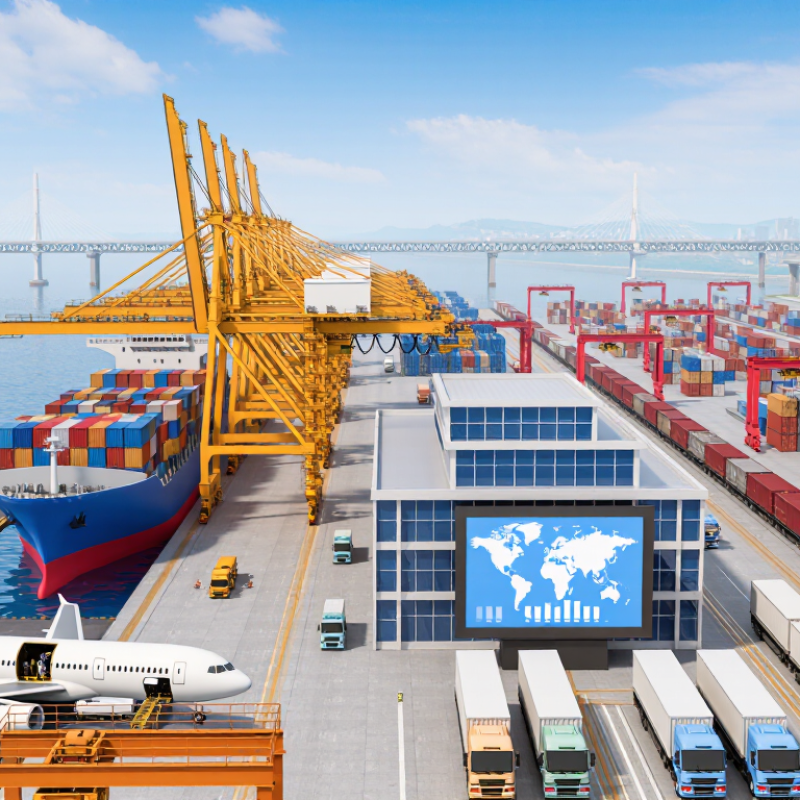
UNCTAD reports that over 80% of global merchandise trade by volume moves by sea. This benchmark gives shippers a useful starting point. For heavy, non-urgent cargo, ocean transport often provides better cost control. A container of machinery may spend weeks at sea, then require careful unloading at a crowded inland terminal. Time matters.
Do not treat the 80% figure as a universal answer. High-value electronics, seasonal products, or urgent replacement parts may need air transport or a combined solution. Compare transit time, cargo volume, port access, handling conditions, insurance, tracking, and customs documentation. A reliable transport service should explain delays clearly and provide measurable delivery milestones. It should also understand destination rules and maintain accurate records. Small details can prevent expensive disruptions.
Tips: Calculate your monthly volume before requesting quotes. Separate product value from shipment weight. Ask how the provider handles port congestion, damaged packaging, and missed connections. Check whether tracking updates reflect real movement, not only scheduled events. Test the service with one manageable shipment first. This approach is slower, perhaps. It can reveal weak communication before larger cargo is exposed. The benchmark helps define your needs, but your route, deadline, and risk tolerance must shape the final decision.
Compare Transport Modes with IATA’s 2023 Air-Cargo Demand Data
How to Find the Best International Transport Service?
Choosing an international transport service starts with the shipment, not the provider.
Air freight is suitable for urgent, lightweight, or high-value cargo. Delivery is fast, but costs rise quickly with weight and fuel changes.
Ocean transport usually fits bulky, non-urgent goods. It offers lower unit costs, although port schedules and customs handling can add delays.
Rail can balance speed and cost across connected regions. Road transport remains practical for regional deliveries and final-mile control.
IATA’s 2023 air-cargo demand data adds useful context. Global air-cargo demand fell 1.9% from 2022 levels. International demand declined 2.2%, while available capacity increased 11.3%. Demand also remained 3.6% below 2019. These figures suggest that more aircraft space did not automatically create stronger shipping demand. Market conditions matter.
Data needs careful interpretation.
When comparing modes, calculate total landed cost, transit time, cargo volume, handling needs, and service reliability. A low ocean quote may lose value if storage charges follow a missed connection. An air option may be wasteful for stable inventory with flexible delivery dates.
My own planning preference would be to test two transport modes against the same shipment profile. That comparison can reveal hidden assumptions. The cheapest route is not always the most dependable, and the fastest route is not always commercially sensible.
Rank Routes Through the World Bank’s 2023 Logistics Performance Index
How to Find the Best International Transport Service?
Rank Routes Through the World Bank’s 2023 Logistics Performance Index
Choosing an international transport service starts with the route, not the cheapest quotation. The World Bank’s 2023 Logistics Performance Index evaluates 139 economies across six logistics dimensions. These include customs, infrastructure, international shipments, logistics competence, tracking, and timeliness. Singapore recorded the highest overall score, at 4.3 out of 5. Finland followed closely, with 4.2.
The LPI does not rank complete door-to-door routes. It ranks logistics performance by economy. This distinction matters. A strong origin country can still connect to a difficult destination. I would score both ends of each route, then inspect border crossings, port congestion, and inland delivery reliability. The report found that imported goods took a median of 44 days to reach their destination after entering the port of arrival. Delays remain expensive.
The method has a weakness. Country averages can hide one unreliable terminal or customs office. Therefore, request recent shipment records, transit-time ranges, and tracking evidence from each transport provider. Compare the promised time with actual delivery data, not attractive estimates.
UNCTAD’s Review of Maritime Transport 2023 confirms that more than 80% of global merchandise trade by volume moves by sea. Ocean routes may reduce cost, but they need buffer days. A practical ranking should combine LPI scores, documented performance, cargo requirements, and delivery risk. Experiences from three recent shipments can reveal more than one polished sales presentation.
Check IMO 2023 Emissions Rules and Customs Compliance
How to Find the Best International Transport Service?
A reliable transport service should explain how it manages IMO 2023 emissions requirements. Since January 2023, ships must meet Energy Efficiency Existing Ship Index standards. They must also follow Carbon Intensity Indicator requirements under MARPOL Annex VI. Ask for the vessel’s CII rating, emissions data process, and Ship Energy Efficiency Management Plan. Details matter. A vague answer deserves careful review.
Customs compliance requires equal attention. Before booking, confirm the required commercial invoice, packing list, transport document, HS code, and origin information. Check whether the destination requires special declarations or supporting certificates. The carrier should identify who reviews these documents and how errors are corrected. A single incorrect product description can delay a container at the border. Paperwork matters.
In practice, the lowest quotation is not always the safest choice. It may exclude emissions surcharges, port inspections, storage, or customs correction fees. Request a written cost breakdown and sample compliance checklist. Also ask how the service handles schedule changes, incomplete documents, and updated regulations. I would not rely only on a polished website; direct answers reveal more. One weakness remains: regulations and local customs procedures can change quickly. Keep asking questions. Choose a provider that records decisions, explains uncertainty, and shares evidence before cargo moves.
How to Find the Best International Transport Service?
Check IMO 2023 emissions targets and customs compliance before selecting a transport provider.
The chart shows the indicative greenhouse-gas emissions reduction checkpoints in the IMO 2023 Strategy compared with the 2008 baseline. The strategy calls for at least a 20% reduction by 2030, striving for 30%; at least 70% by 2040, striving for 80%; and net-zero emissions from international shipping by or around 2050. When comparing transport services, also verify accurate HS classification, commercial invoices, packing lists, origin evidence, import declarations, and required customs data for each destination.