In recent years, the service logistic sector in China has become increasingly vital for global trade. According to the latest report from the International Logistics Association, the market size for logistics services in China is projected to exceed $1 trillion by 2025. This surge reflects a growing demand for efficient and reliable service logistic solutions, particularly among international buyers seeking to optimize their supply chains.
Steve Zhao, a prominent expert in the logistics field, noted, "China's ability to provide tailored service logistic solutions sets it apart from competitors." His perspective aligns with the findings of a recent analysis by Supply Chain Insights, which revealed that nearly 70% of global businesses consider China their primary logistics partner. Companies increasingly rely on advanced technology and innovative strategies offered by Chinese logistics providers to ensure smooth operations.
Challenges remain, however. Despite the progress, global buyers must navigate various hurdles, such as fluctuating regulations and evolving consumer demands. The continuous improvement in service logistics is essential for businesses looking to thrive in this dynamic environment. Understanding these complexities while leveraging China's strengths can be the key to success in an interconnected global marketplace.
Logistics is the backbone of global trade. Efficient logistics solutions ensure timely delivery of goods. For many global buyers, understanding these solutions is crucial. Poor logistics can lead to delays and increased costs. This often results in unhappy customers and lost sales.
A professional logistics network improves overall performance. It connects suppliers and buyers effectively. Communication and coordination are vital. Problems can arise in customs clearance or transportation. These challenges can disrupt the flow of goods. Awareness and preparation are essential to overcome these hurdles.
Investing in reliable logistics means more than just moving goods. It involves strategic planning and management. A thoughtful approach helps address potential issues. Buyers must assess their logistics partners closely. They should seek expertise that fits their specific needs. Adaptability and responsiveness can make a significant difference in success.
China's logistics services market is flourishing, driven by several key factors. The rapid development of e-commerce is one of the main catalysts. According to projections from Statista, the Chinese e-commerce market is expected to reach a staggering $1.4 trillion by 2025. This surge in online shopping demands efficient logistics solutions to facilitate quick delivery. Businesses increasingly rely on advanced supply chain strategies to meet consumer expectations.
Infrastructure improvements also play a critical role. China has invested heavily in transportation networks. The country boasts over 77,000 kilometers of high-speed rail, according to the National Development and Reform Commission. Rail logistics are more sustainable and cost-effective. This rise in infrastructure efficiency allows for faster shipping times, which is essential for global buyers. However, challenges remain. Certain regions still struggle with logistics bottlenecks and inefficiencies. Addressing these concerns is essential for sustaining growth.
Technology advancements further enhance logistics capabilities. Automation and AI are reshaping warehouse operations. An industry study from McKinsey reveals that AI could improve logistics productivity by up to 30%. Yet, reliance on technology comes with risks, such as potential cybersecurity threats. While the outlook is promising, the industry must focus on balancing innovation with security. Future growth hinges on tackling these ongoing challenges.
China's logistics solutions have risen to prominence in the global market. The efficiency of China's supply chain is impressive. With advanced infrastructure and technology, they offer speedy services. However, not everything is perfect. Challenges such as congestion and regulatory hurdles can arise. Buyers must navigate these obstacles while weighing potential benefits.
When comparing Chinese logistics with global competitors, several factors come into play. Cost-effectiveness is a major advantage for China. Shipping rates tend to be lower than in many Western countries. Yet, reliability can sometimes suffer due to delays or inadequate tracking systems. Global clients may find inconsistencies in service quality, which raises concerns. Trusting a logistics partner requires careful consideration.
In addition, the adaptability of logistics solutions varies. Chinese companies are often quick to innovate. They implement new technologies faster than many rivals. Conversely, some global firms maintain a steady approach, prioritizing established methods. This difference may lead to disparities in service delivery. Buyers should assess their specific needs when selecting a logistics provider. A comprehensive evaluation ensures they choose the best option for their requirements.
Innovative technologies are dramatically transforming China's logistics sector. The introduction of artificial intelligence is reshaping how warehouses operate. Automated systems handle inventory, reducing human error. These systems can process vast amounts of data quickly. They notify managers when restocking is needed, saving time and resources.
Blockchain technology is another game-changer. It provides transparent and secure tracking of shipments. This builds trust among buyers and suppliers. However, some industries are still hesitant to adopt blockchain. They worry about the technology's complexity and implementation costs. These concerns are valid but warrant deeper exploration.
Additionally, the rise of drones and robotics is revolutionizing last-mile delivery. Drones can navigate busy urban landscapes efficiently. Yet, regulatory challenges slow their widespread use. There remains a gap in understanding the best logistics solutions. It requires constant adaptation and willingness to innovate. Embracing these changes can lead to improved service for global buyers.
| Solution Type | Description | Advantages | Typical Use Cases | Innovative Technology |
|---|---|---|---|---|
| Automated Warehousing | Use of robotics and AI for inventory management and order fulfillment. | Increased efficiency, reduced labor costs, real-time inventory tracking. | E-commerce, FMCG distribution, and retail. | Robotics, AI algorithms, and machine learning. |
| Last-Mile Delivery Solutions | Innovative local distribution systems including drones and autonomous vehicles. | Faster delivery times and reduced traffic issues. | Urban deliveries, package tracking, short-distance shipping. | Drone technology, GPS tracking, and real-time routing software. |
| Cold Chain Logistics | Transport and storage solutions specifically for temperature-sensitive goods. | Maintains product quality, ensures food safety, and extends shelf life. | Food and beverage distribution, pharmaceuticals, biotechnology. | IoT sensors, temperature-controlled vehicles. |
| Data Analytics for Logistics | Use of big data analytics to optimize supply chain operations. | Improves decision-making, enhances demand forecasting. | Inventory management, route optimization, risk management. | Machine learning, predictive analytics. |
| Blockchain for Supply Chain Transparency | Decentralized ledger for tracking goods throughout the supply chain. | Enhances traceability, reduces fraud risk, builds trust. | High-value goods, luxury items, and pharmaceuticals. | Blockchain technology, smart contracts. |
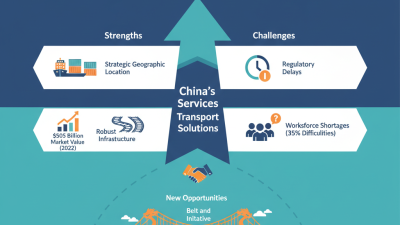
China's logistics industry faces multiple challenges, impacting global supply chains. One critical issue is inefficiency in transportation networks. According to a report by the World Bank, about 30% of logistics costs in China are attributed to transport inefficiency. This not only affects domestic businesses but also poses challenges for international buyers relying on timely deliveries.
Another challenge is the lack of skilled labor. The China Logistics Development Report 2022 indicates that about 45% of logistics firms struggle to find qualified professionals. This skill gap can lead to delays and increased operational costs. To address this, companies must invest in training programs and partnerships with educational institutions.
Moreover, regulatory hurdles complicate logistics operations. Cross-border e-commerce regulations can be inconsistent, creating confusion. A report from McKinsey noted that regulatory compliance costs can consume up to 10% of total logistics expenses. Streamlining these regulations could enhance service efficiency. Addressing these challenges is crucial for improving China's logistics landscape and meeting global buyer expectations.